
Welcome, Design Explorers!
Greetings, fellow seekers of design brilliance! I'm Choi Yerin, your guide on this digital expedition into the fascinating Computation in Design at Lasalle College of the Arts.
If you've landed here, congratulations are in order! You're about to embark on a journey through my semester-long odyssey of projects, discoveries, and the occasional "aha!" moment. Consider this website your passport to the captivating world of creativity and innovation.
So, kick back, relax, and get ready to dive into the captivating insights and adventures of Choi Yerin's Computation in Design saga. Let's explore together, shall we? Scroll Now!

Workshops
Over the semester I participated in 4 different workshops covering topics such as Creative Coding, Projection Mapping, Making, and Physical Computing. Here you will find some of the process documentation and deliverables that were created in small teams of up to 3 people or individually.
Although the four workshops may seem quite distinct at first glance, they are all united by the overarching theme of utilizing coding to create tangible, physical experiences. My final products took many different forms, ranging from a booklet to a projection video, papercraft, and even a machine.
Throughout the entire process, I found myself particularly drawn to the collaborative problem-solving aspect of working with my team members. By intentionally seeking out new colleagues and exploring different avenues in each workshop, I was able to delve into a variety of diverse fields and achieve a wide range of results. Ultimately, seeing the concrete, tangible fruits of my labor was incredibly rewarding and motivated me to continue expanding my skills and knowledge.
Workshop one
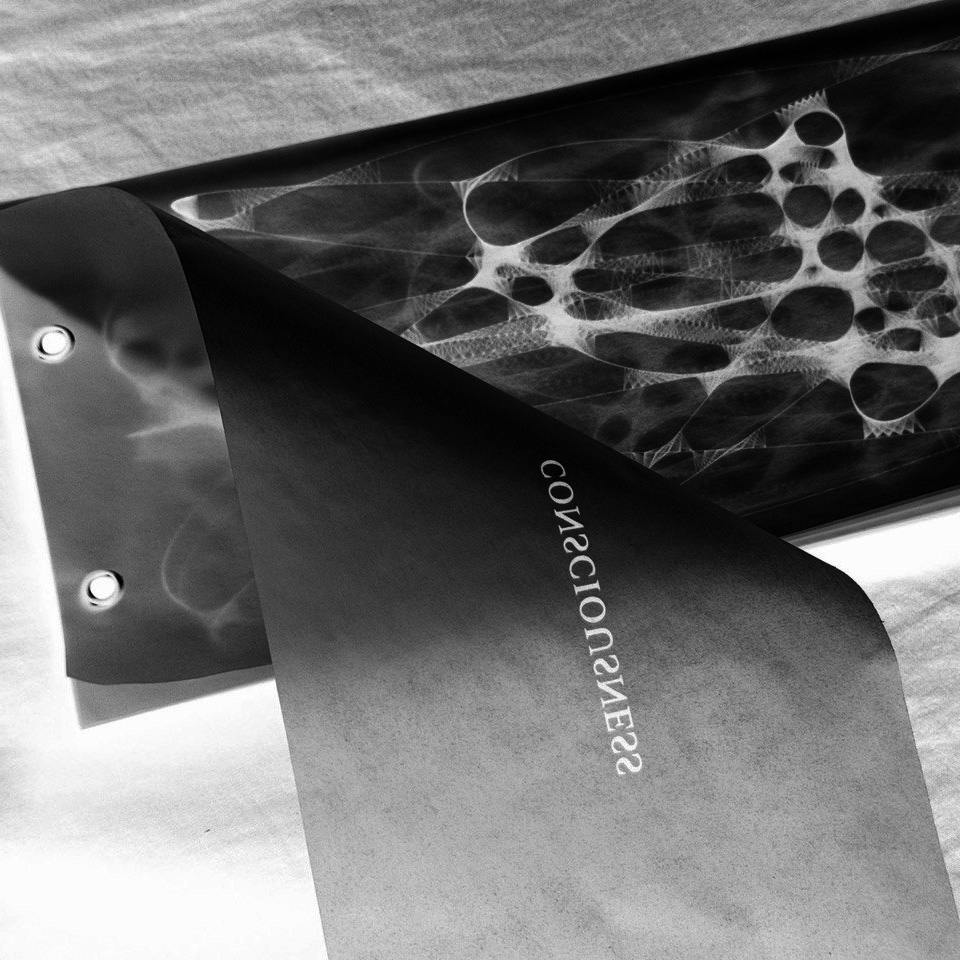
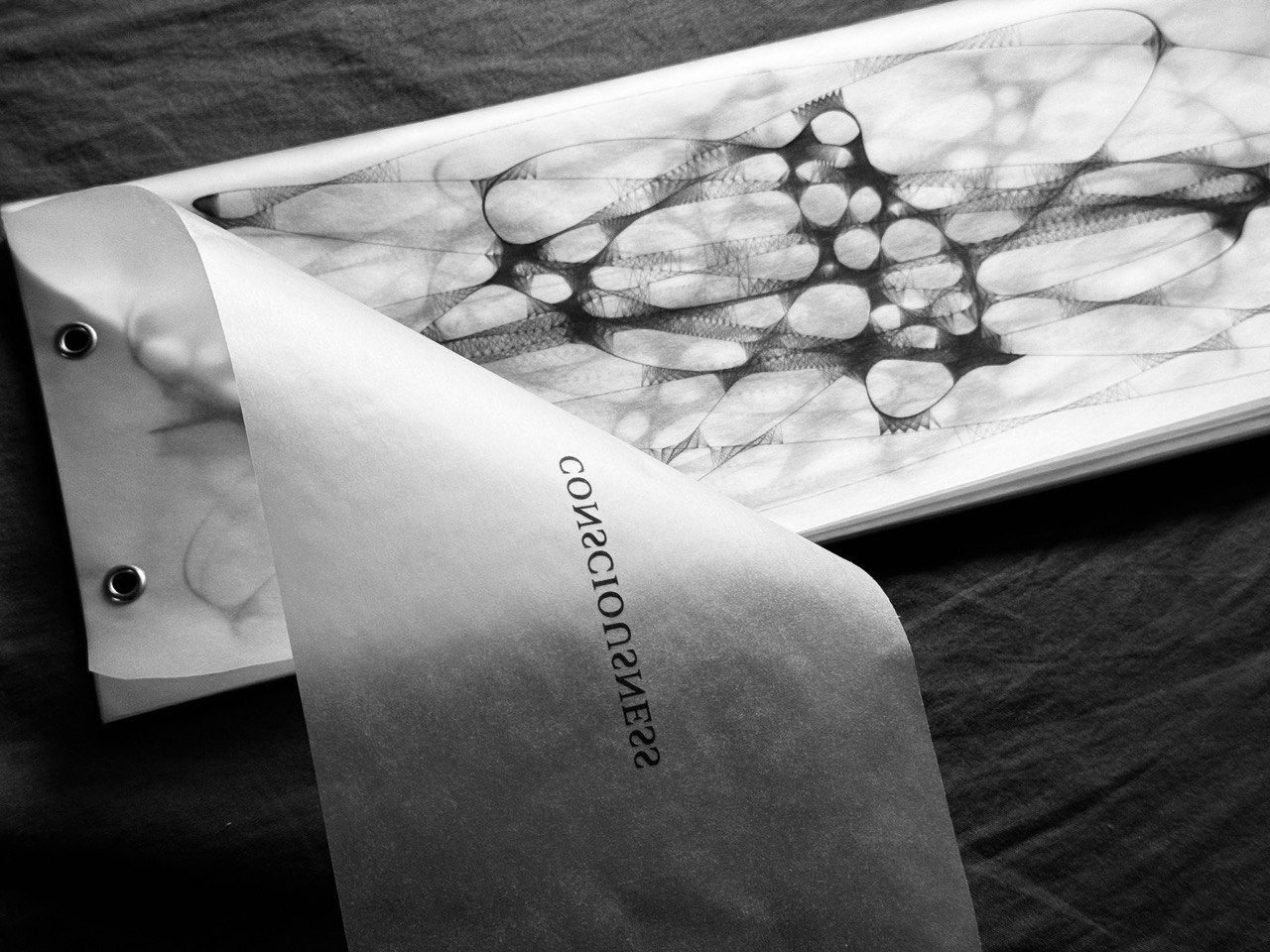
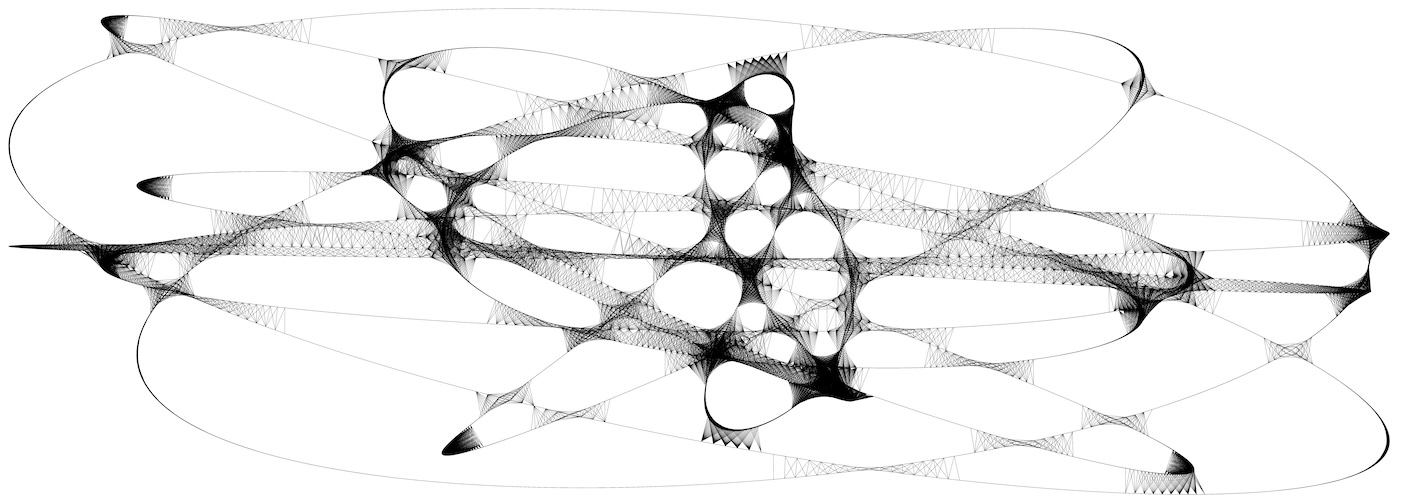
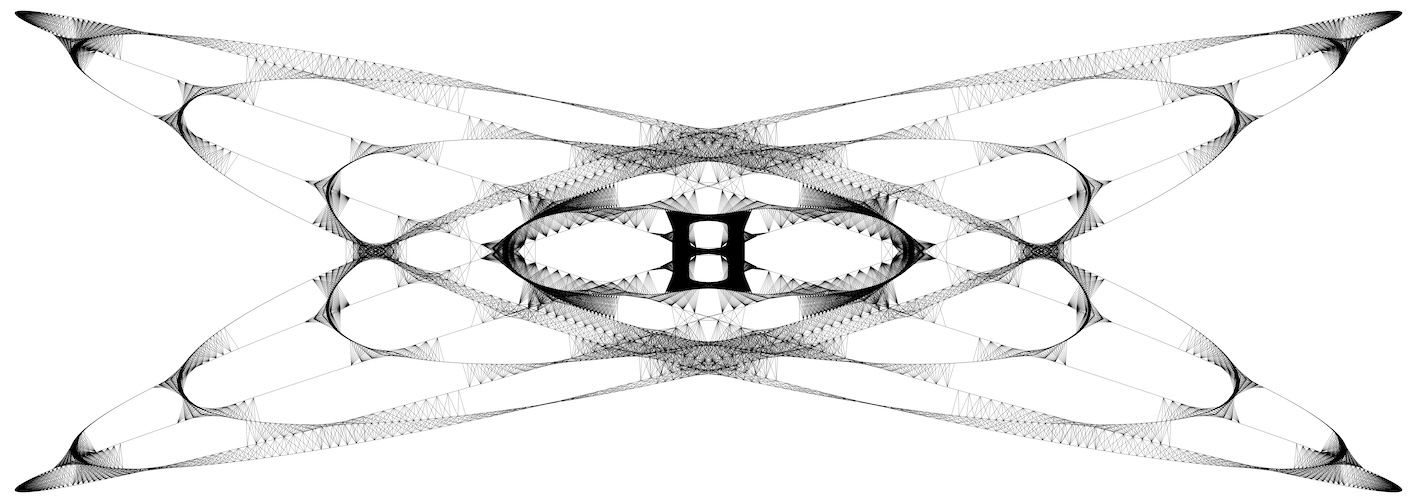
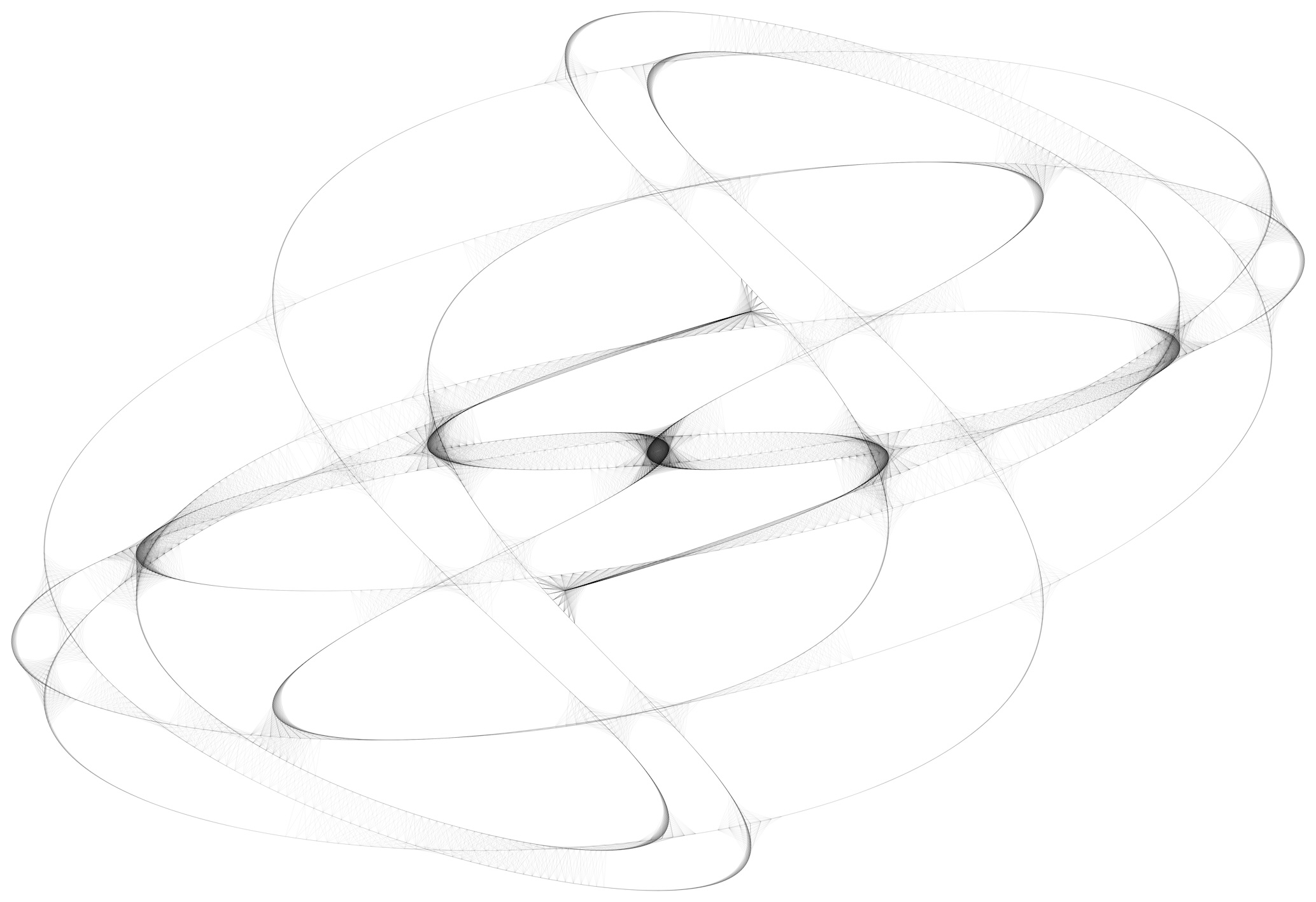
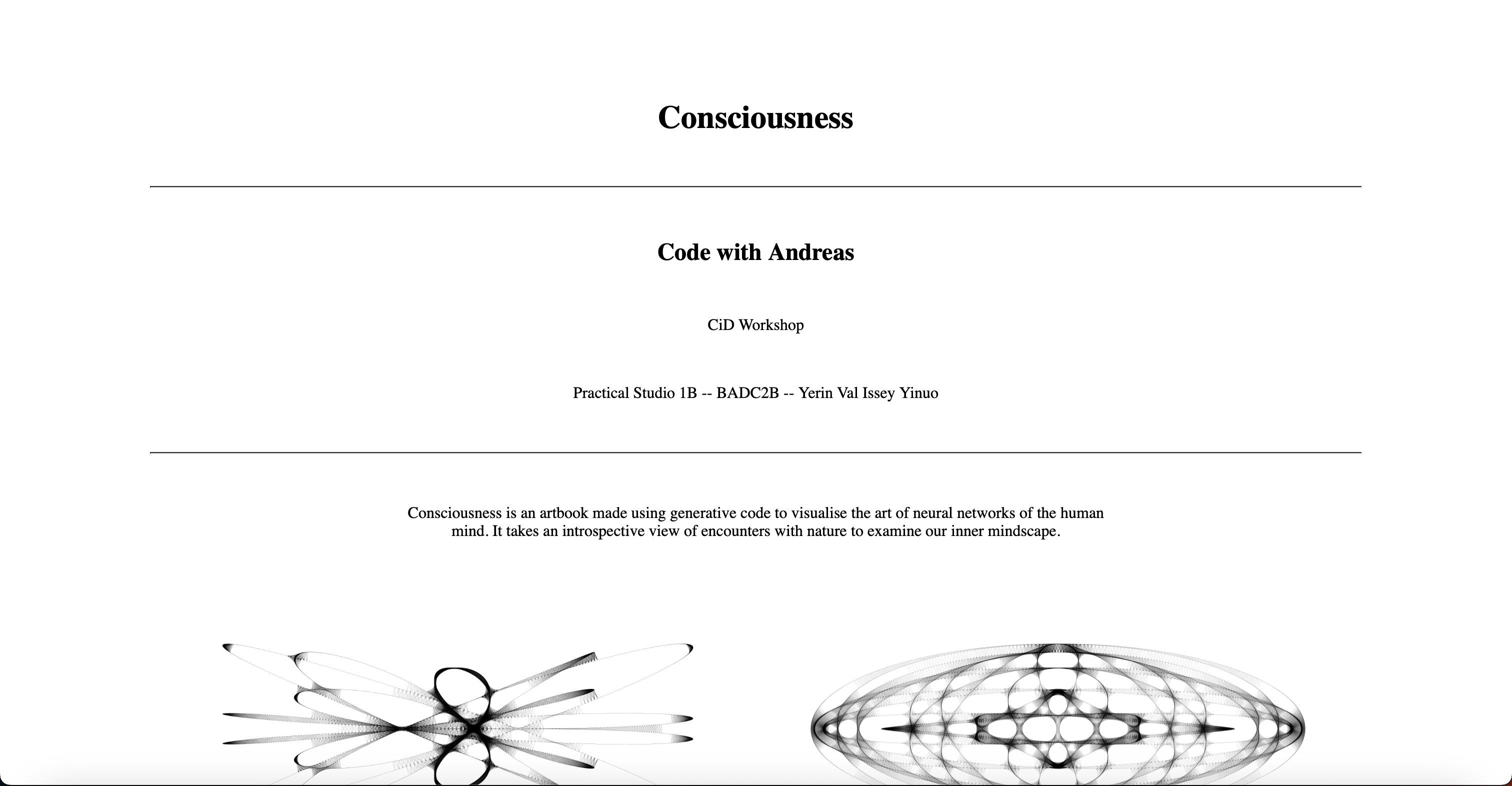
For the third workshop with Andreas, we explored creative coding and generative design to create dynamic or interactive generative artwork. With the theme “Encounters with Nature”, we were given 4 brief options to choose one to proceed with up to our preference.
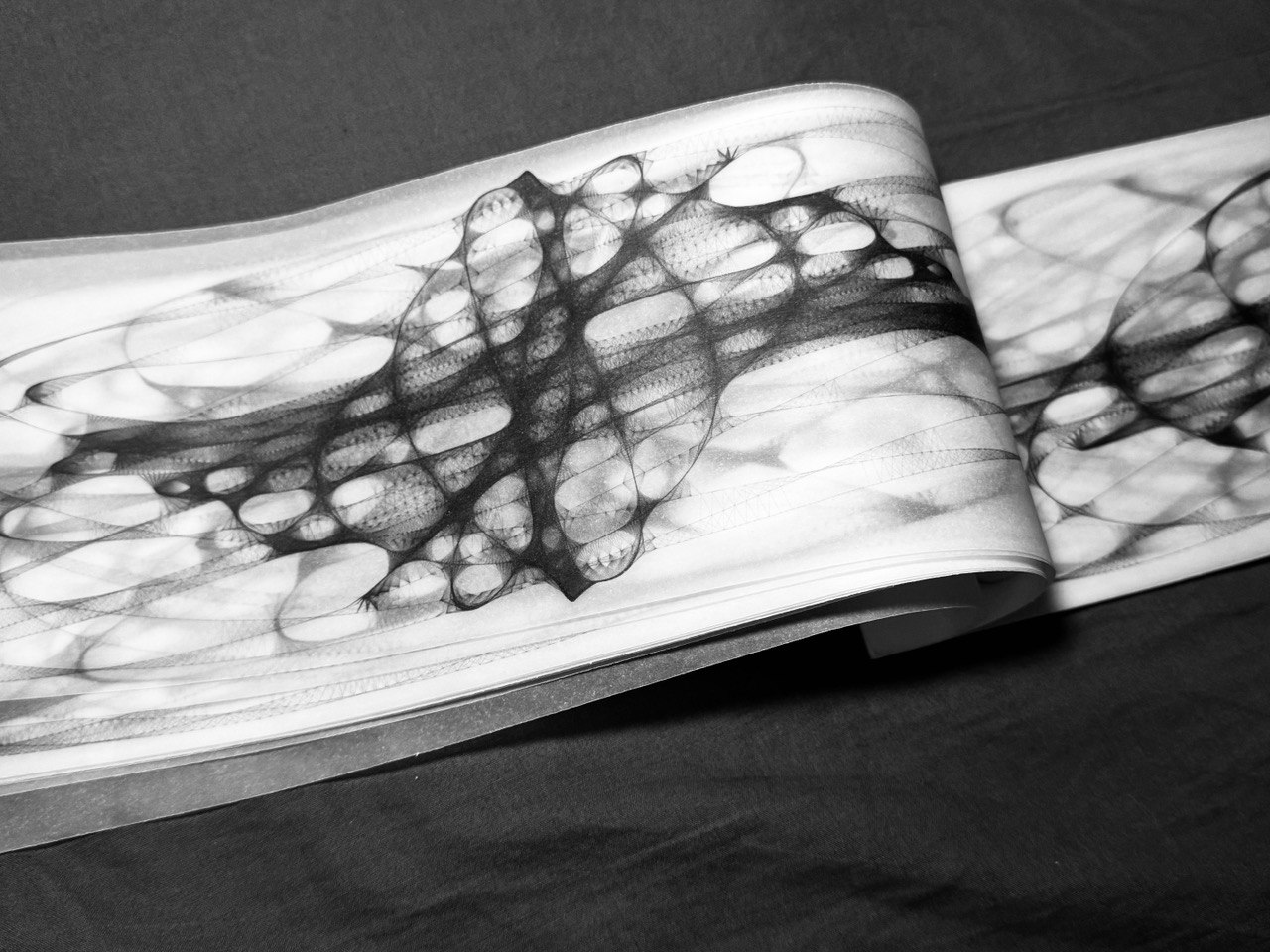
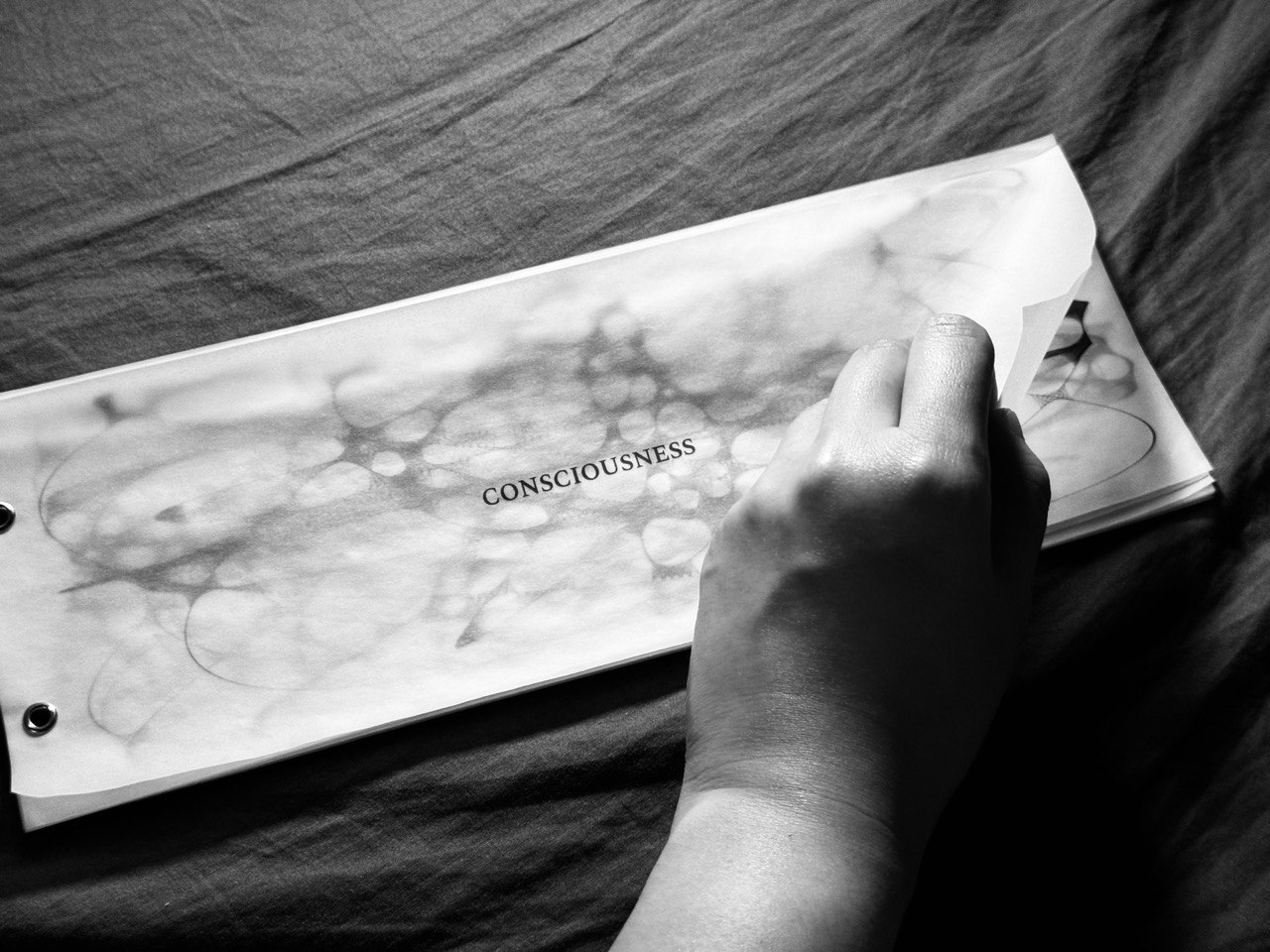
I worked as a team with Valerie, Yinuo, and Issey. From witnessing the examples of outcomes that we saw during the session, and as we all were interested in printing and making a publication, we decided to go for brief two, generator, using p5.js and binding with a unique type of paper and print.
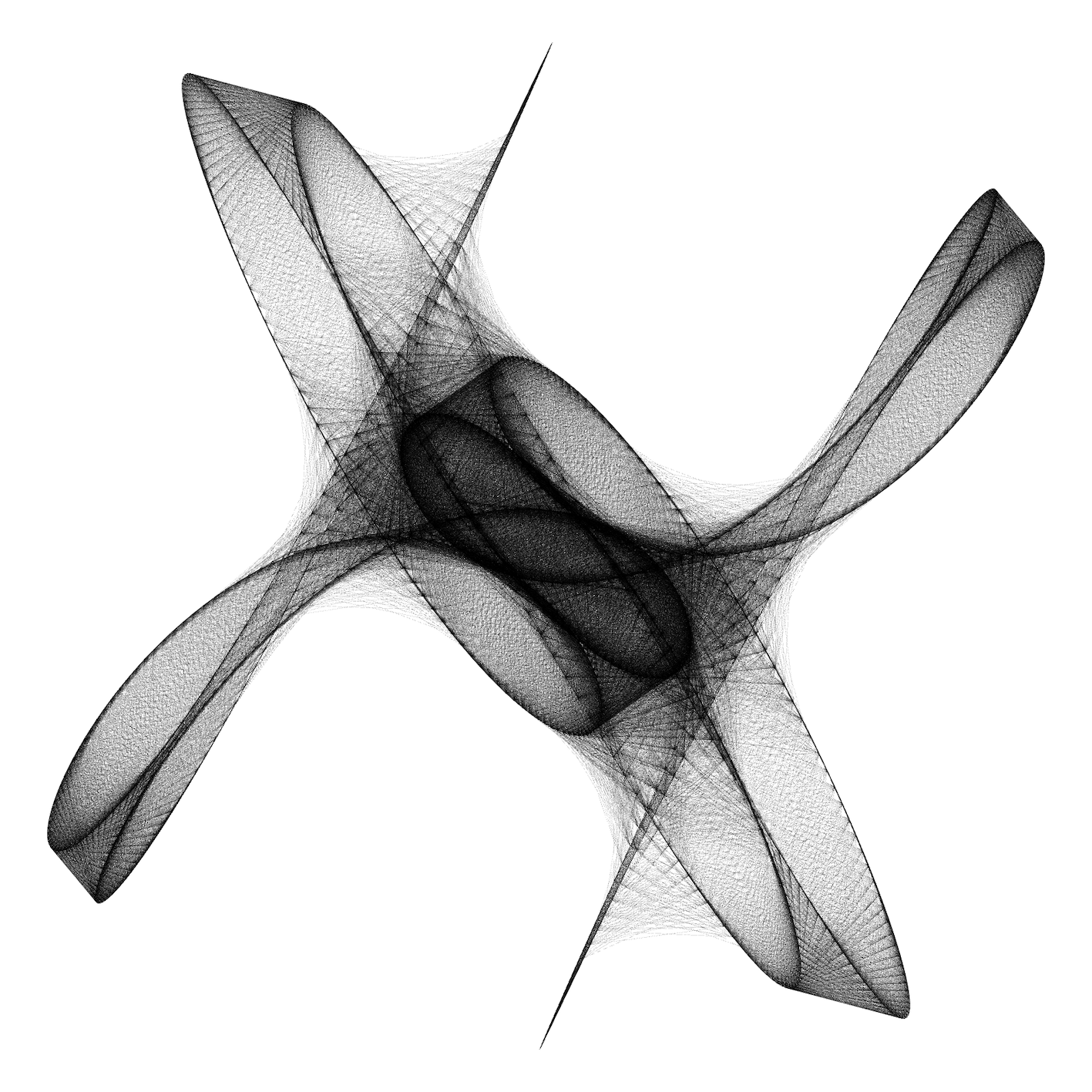
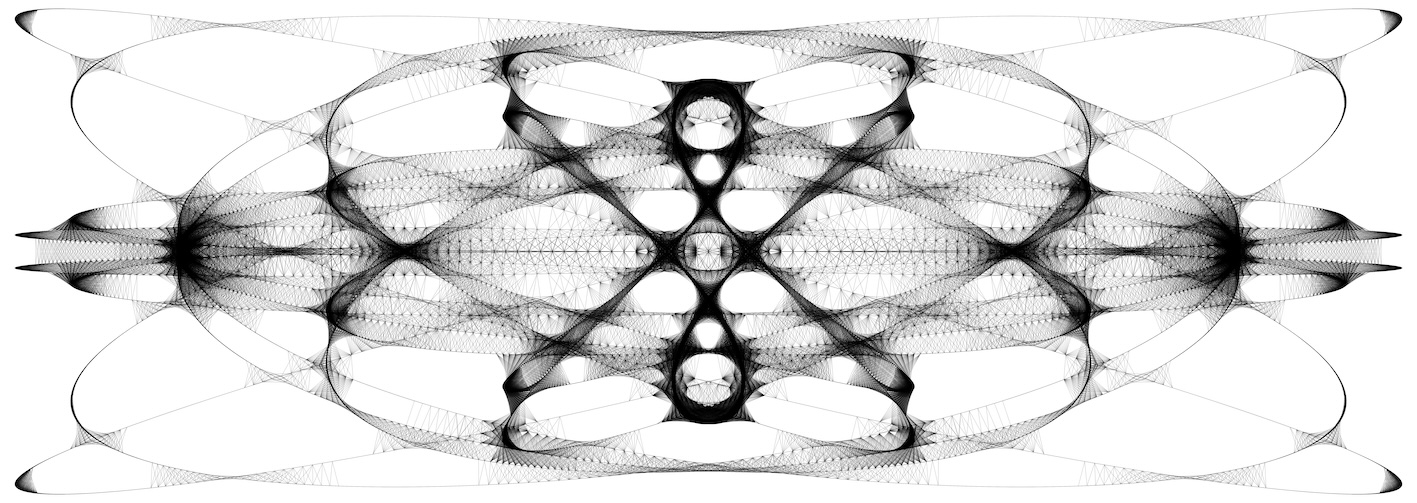
At first, we tried generating a bunch of images connected to elements of nature such as wind, dust, water, etc., around 8 images for each person, by making changes to codes provided from the class sheet. However, once we attempted to merge them into one, we discovered that there was no flow and everything was clashing. The images were created in vastly different styles, sourced from various codes and concepts. We had to make the difficult decision to begin the project anew. We returned to the ideation phase and prioritized narrowing it into a clear and concise concept for the publication, sticking to one generator.
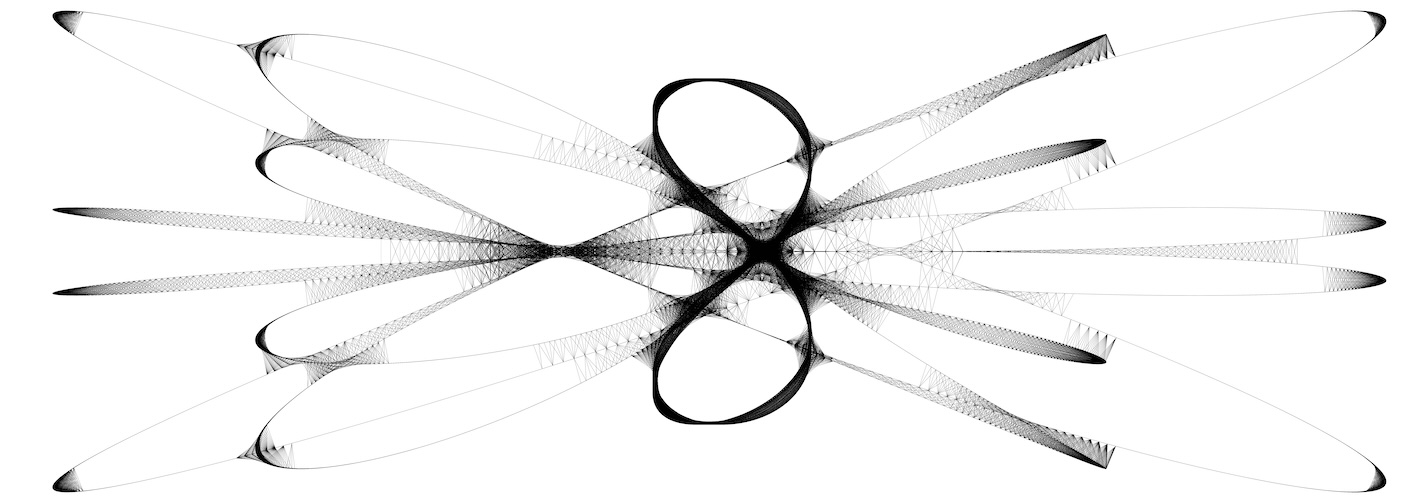
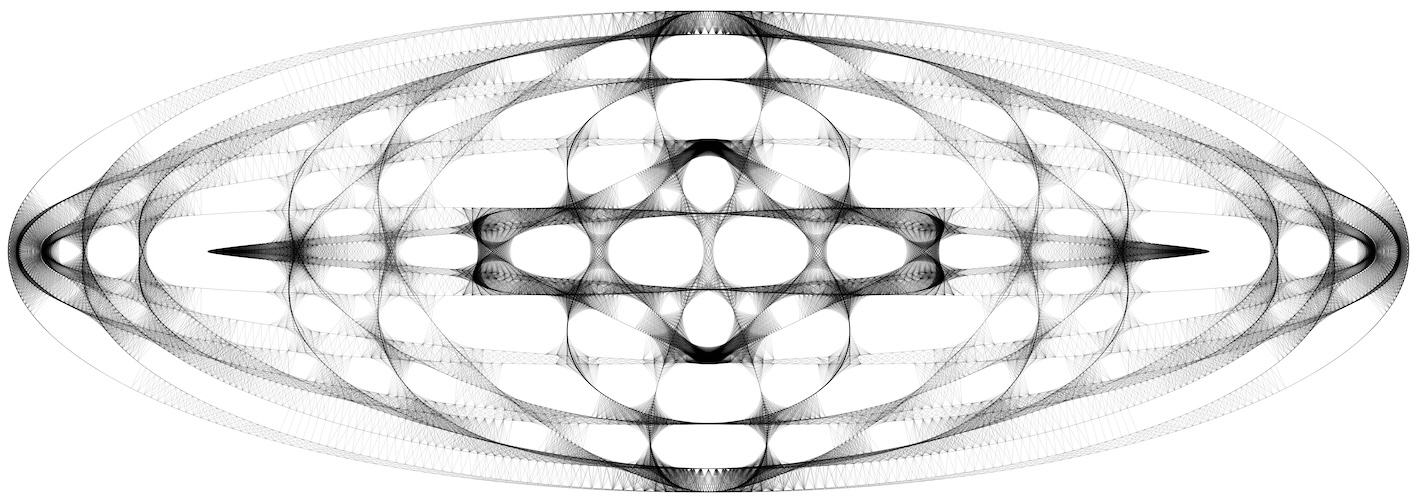
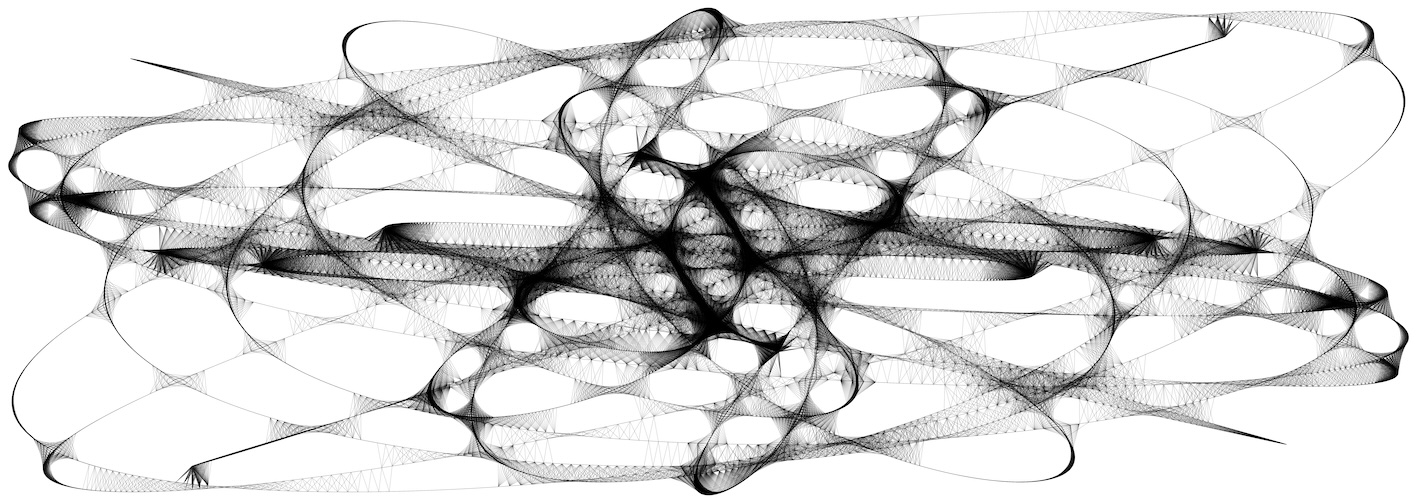
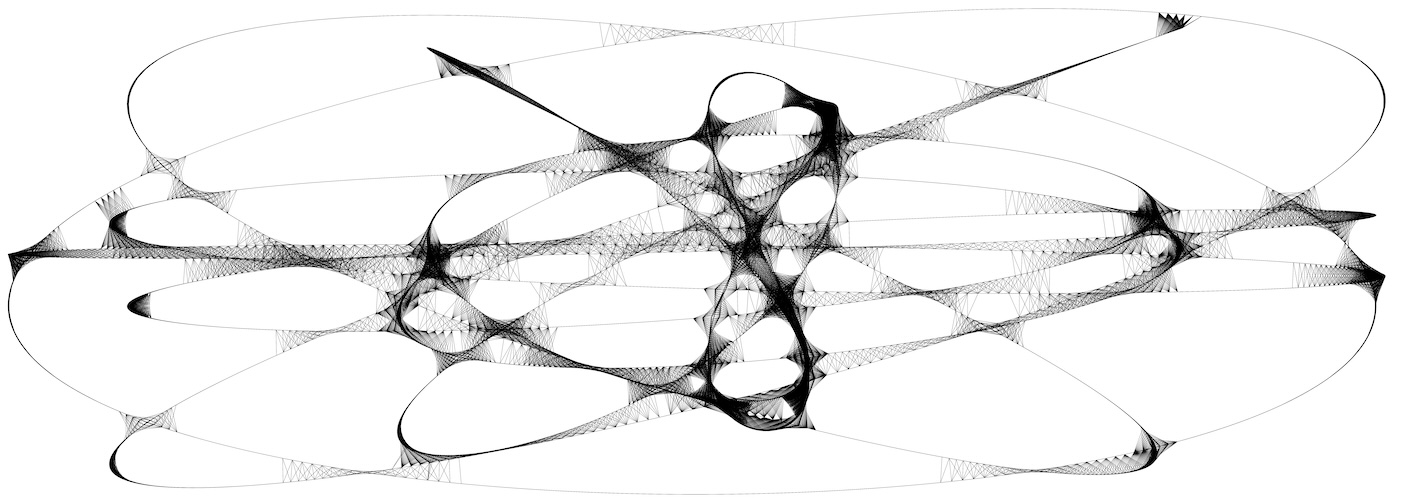
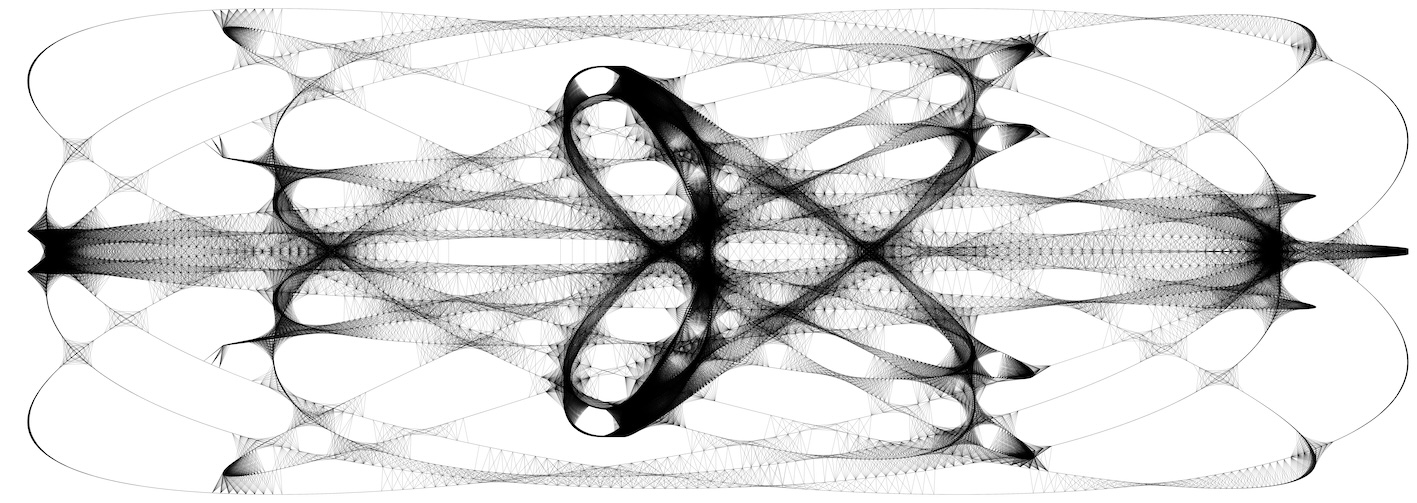
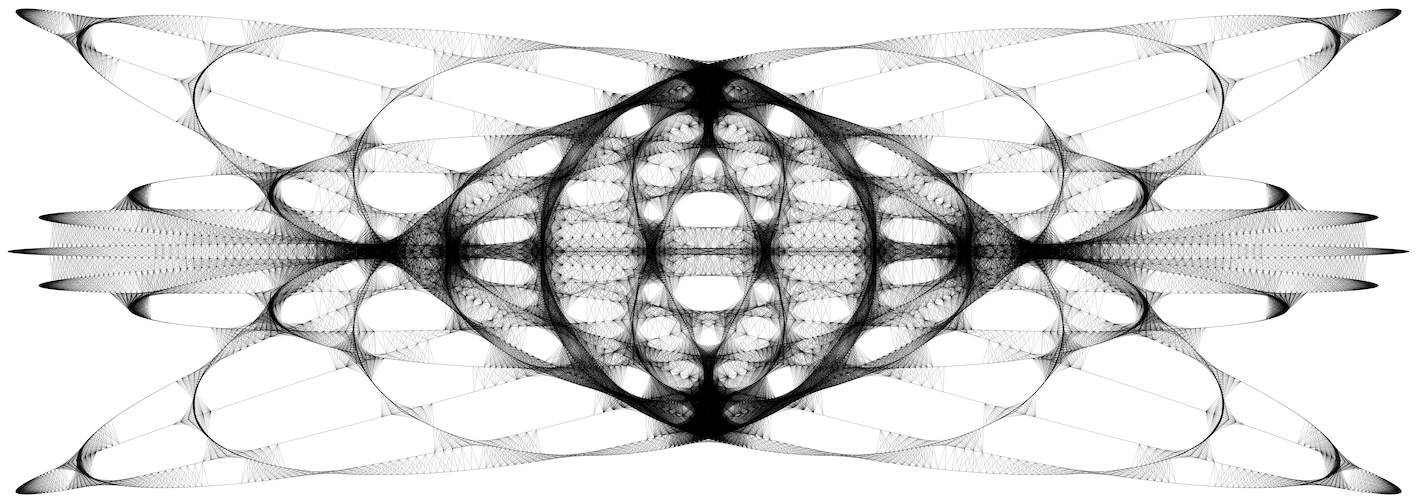
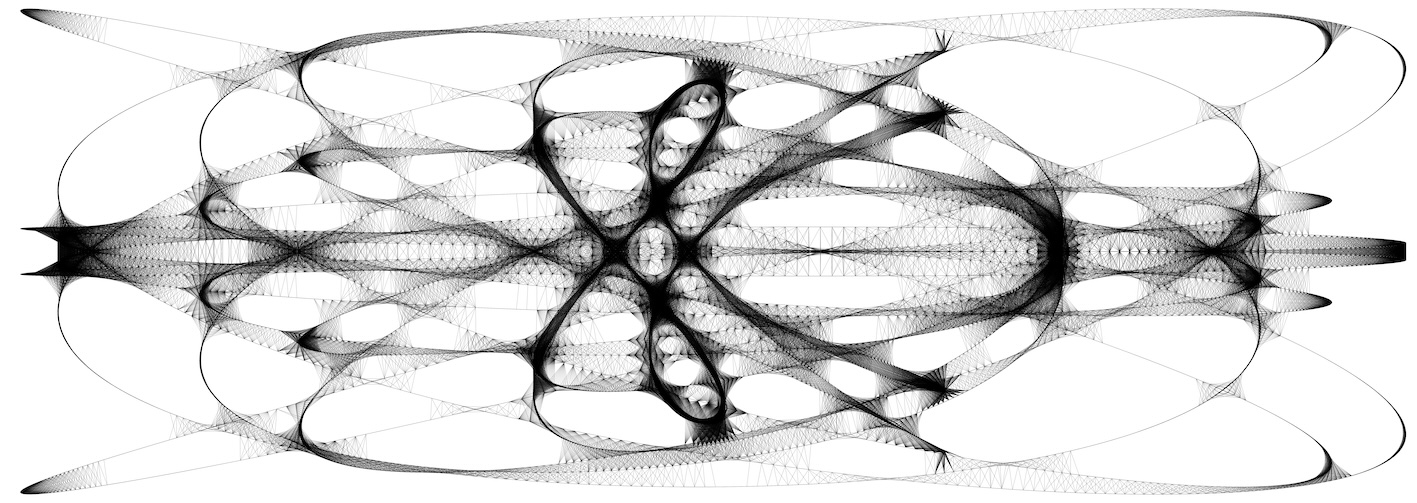
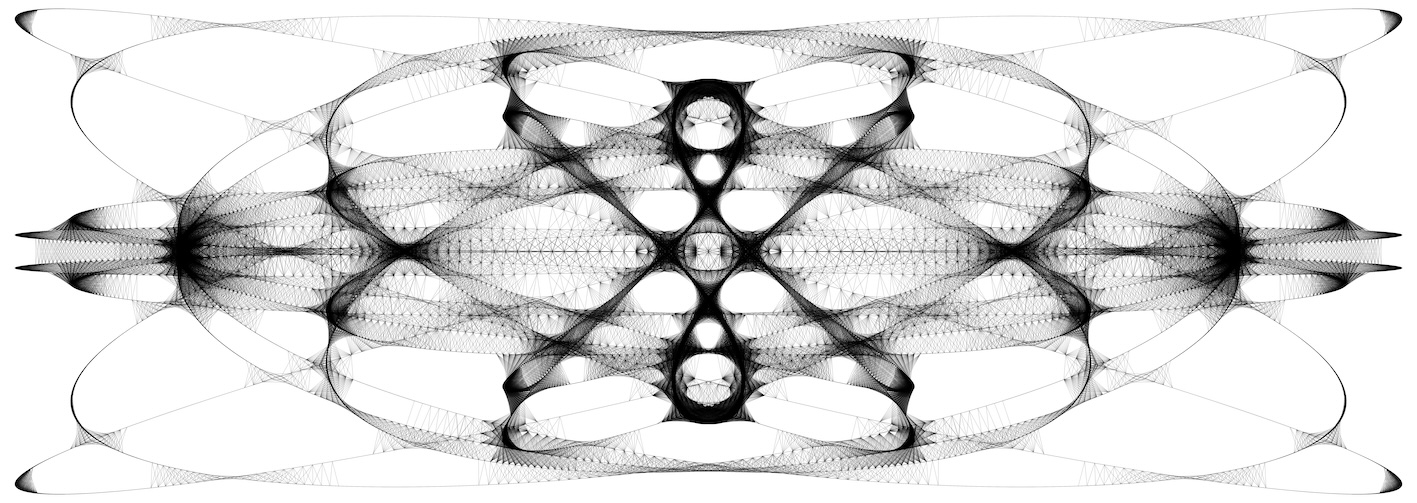
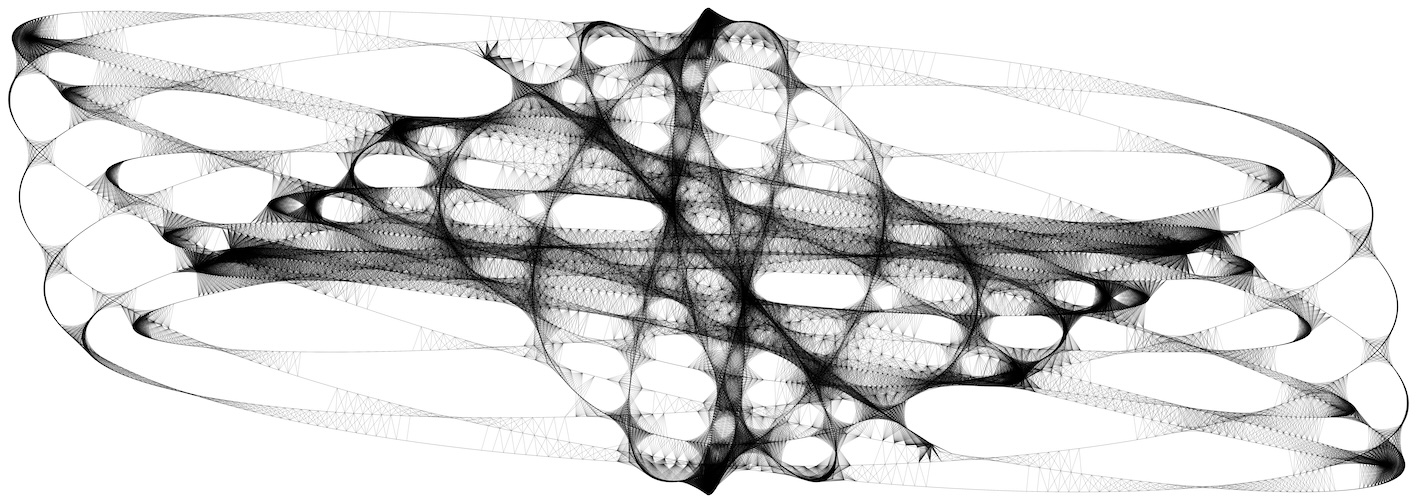
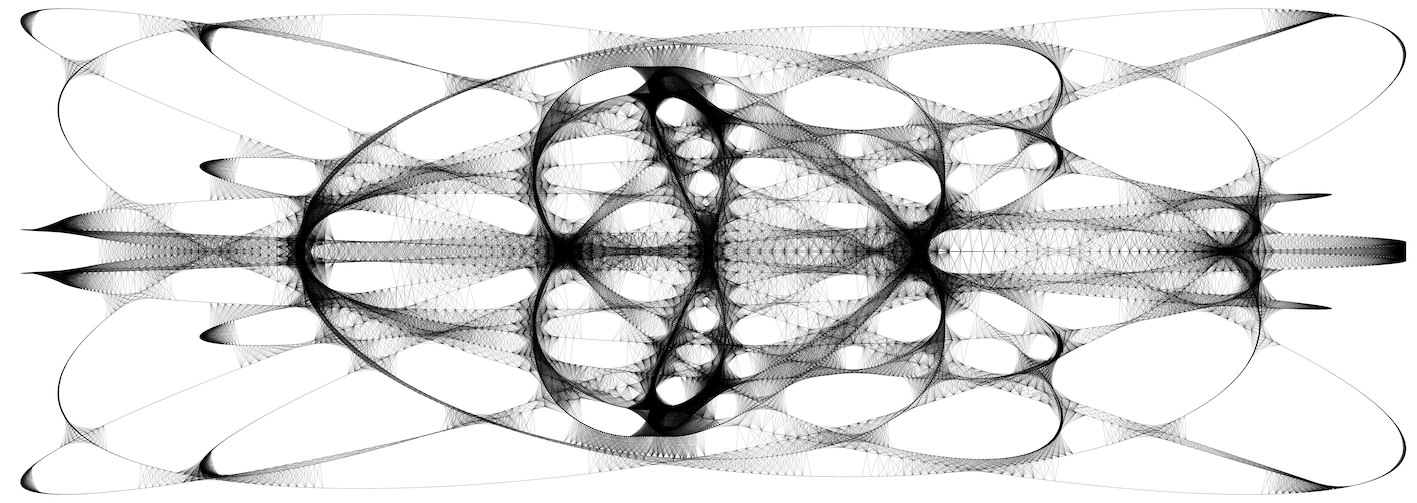
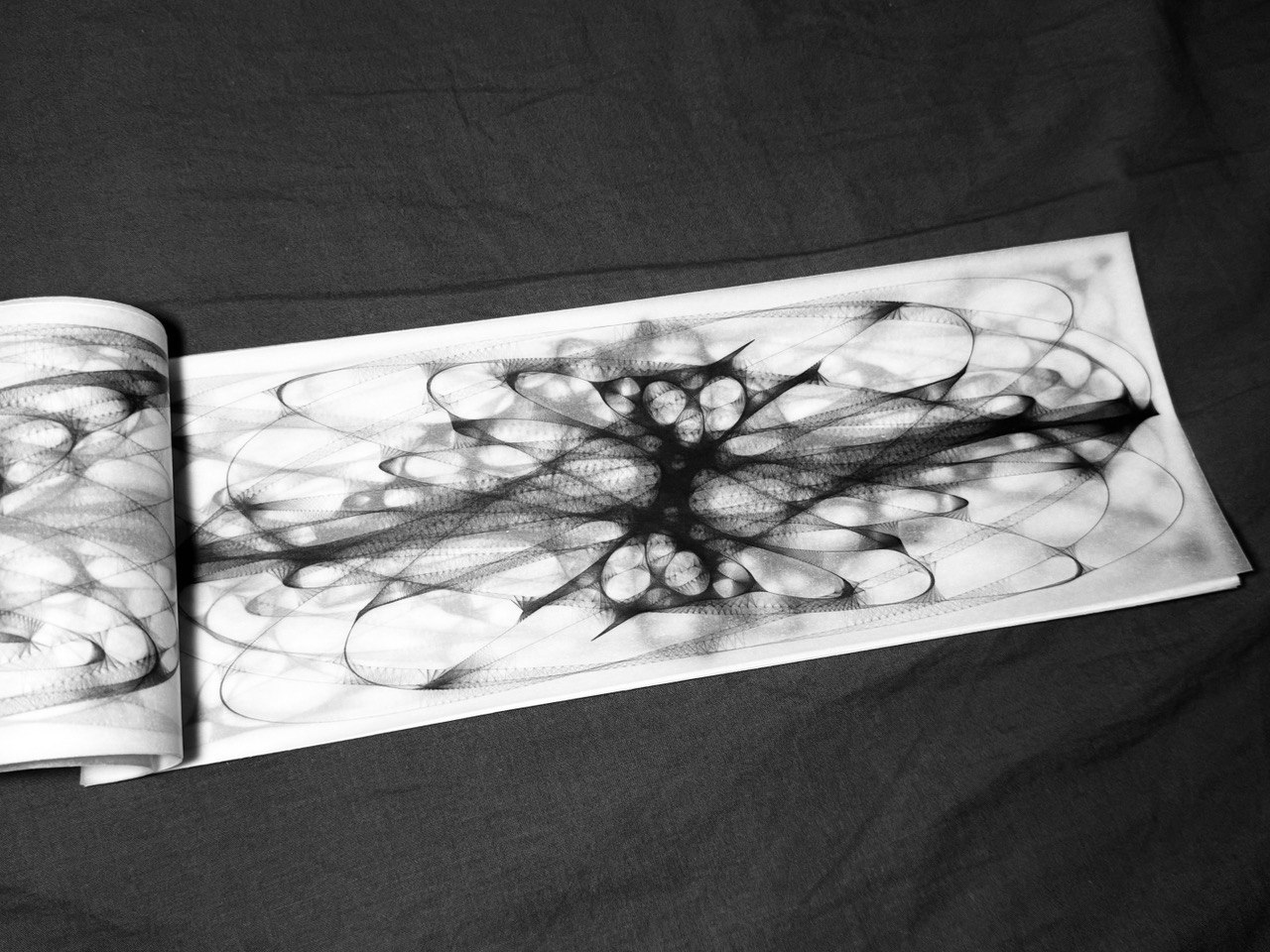
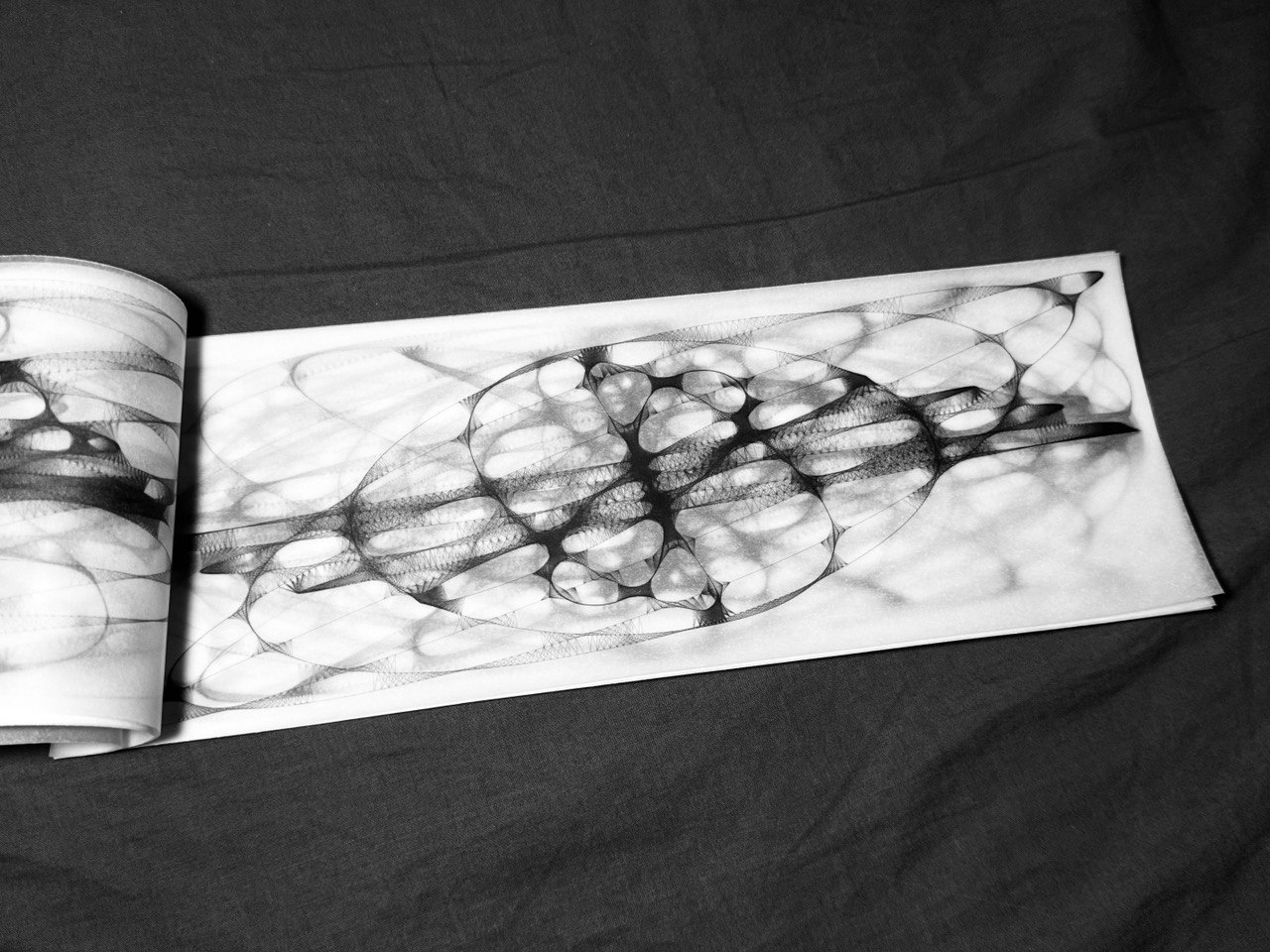
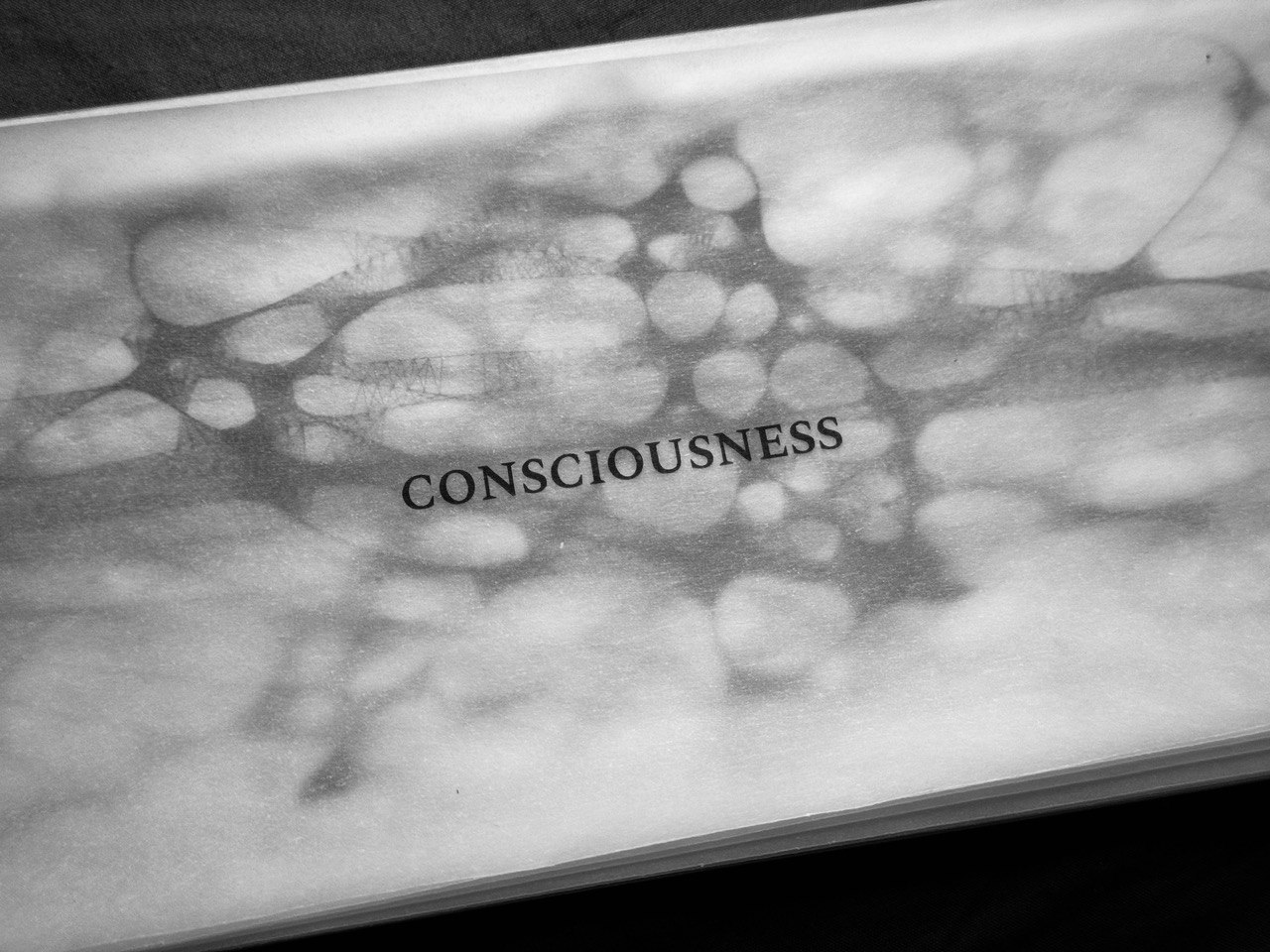
We came up with a more profound theme of consciousness. We tried to visualize the art of neural networks of the human mind. It takes an introspective view of encounters with nature to examine our inner mindscape. For the final outcome, we published a booklet of generated images on tracing paper for deeper deliberation of meaning and documented the process and results in a website using HTML and CSS.
Workshop two
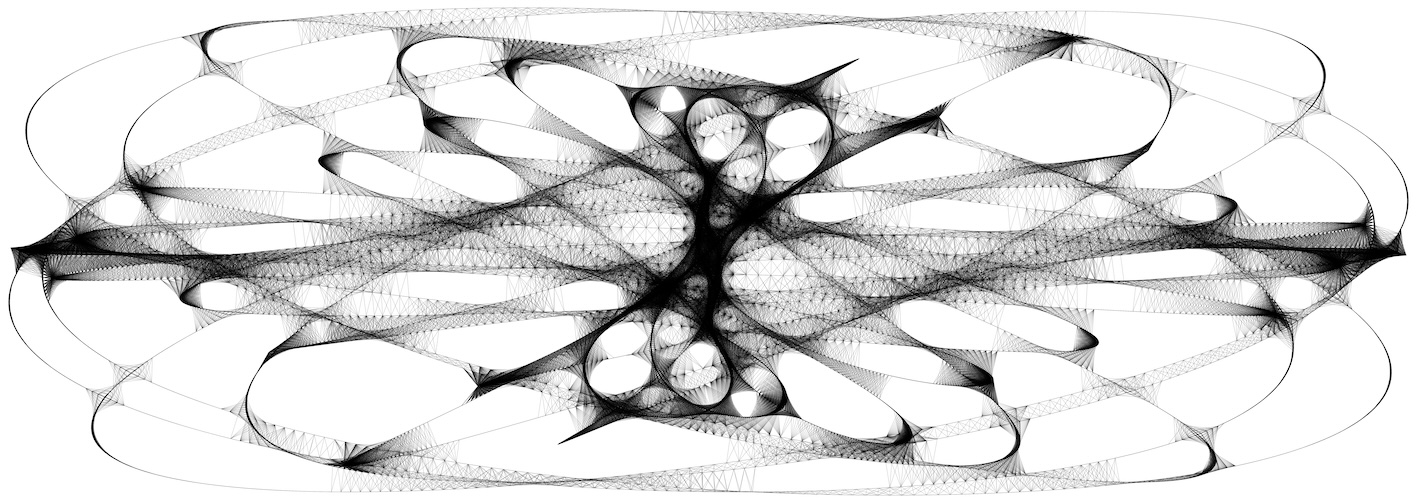
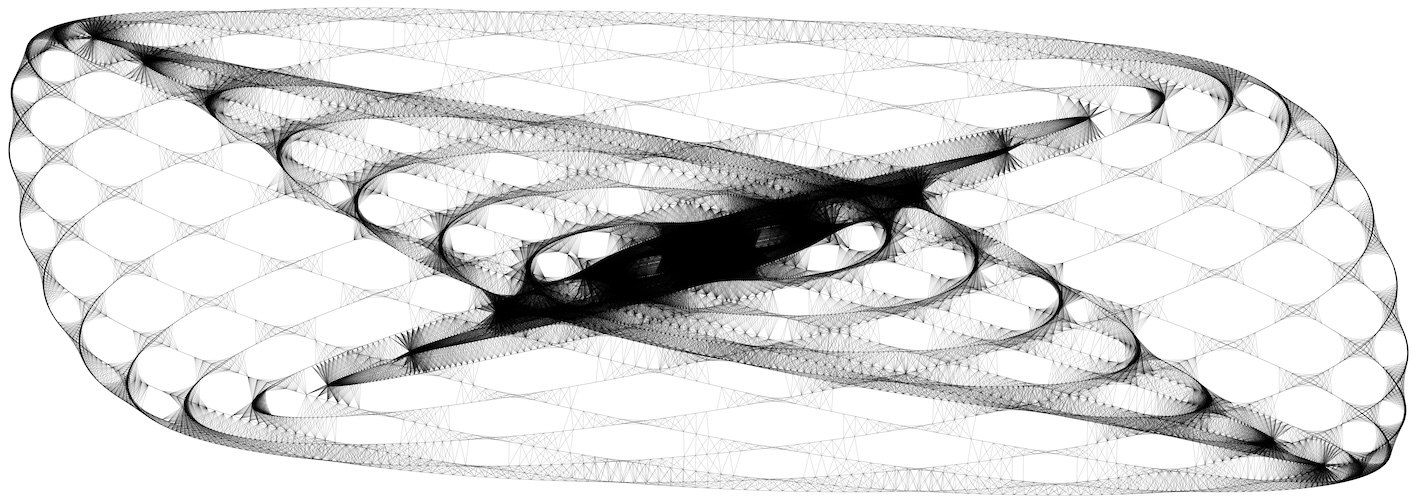
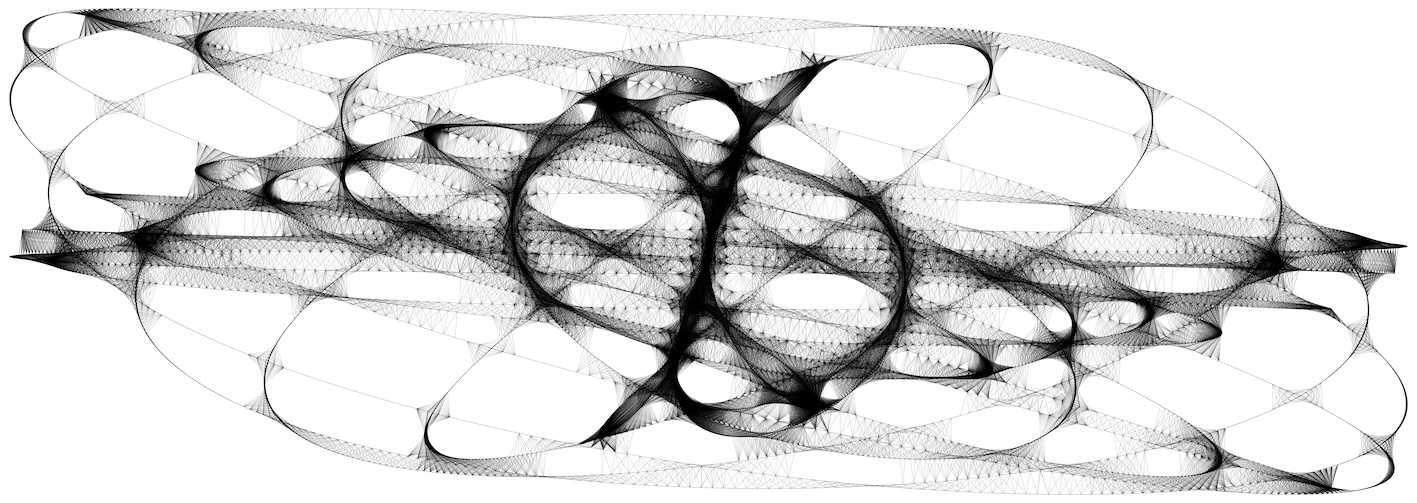
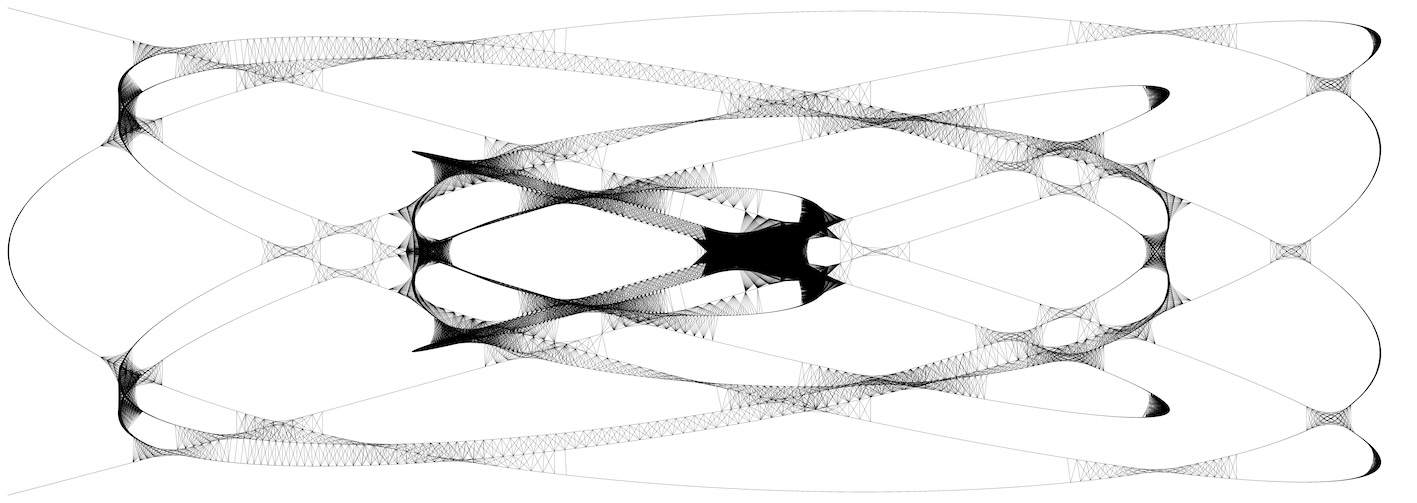
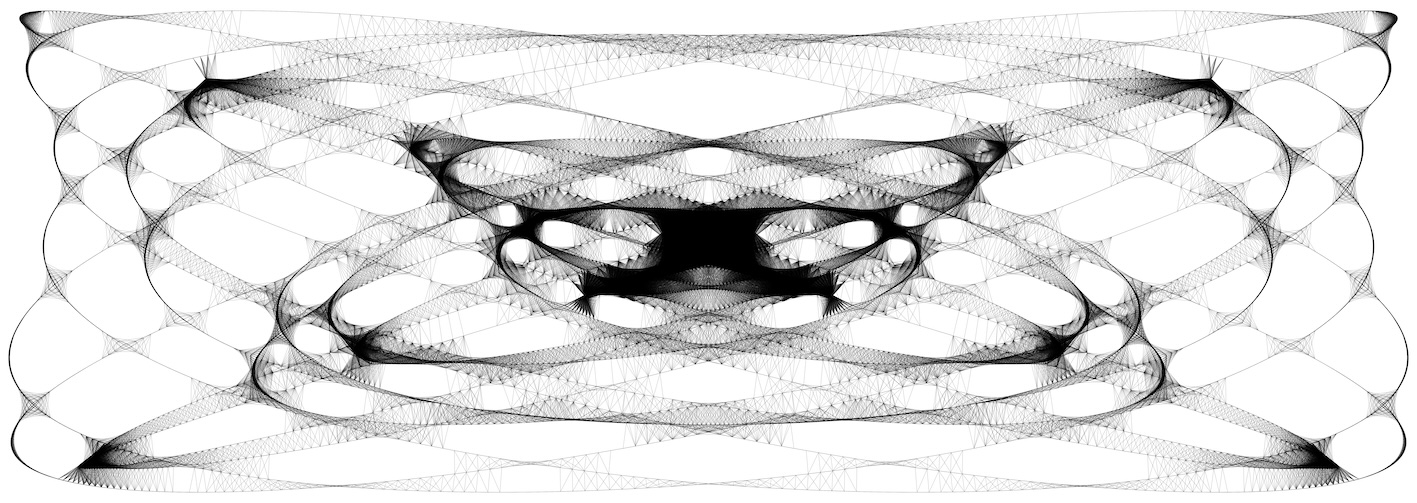
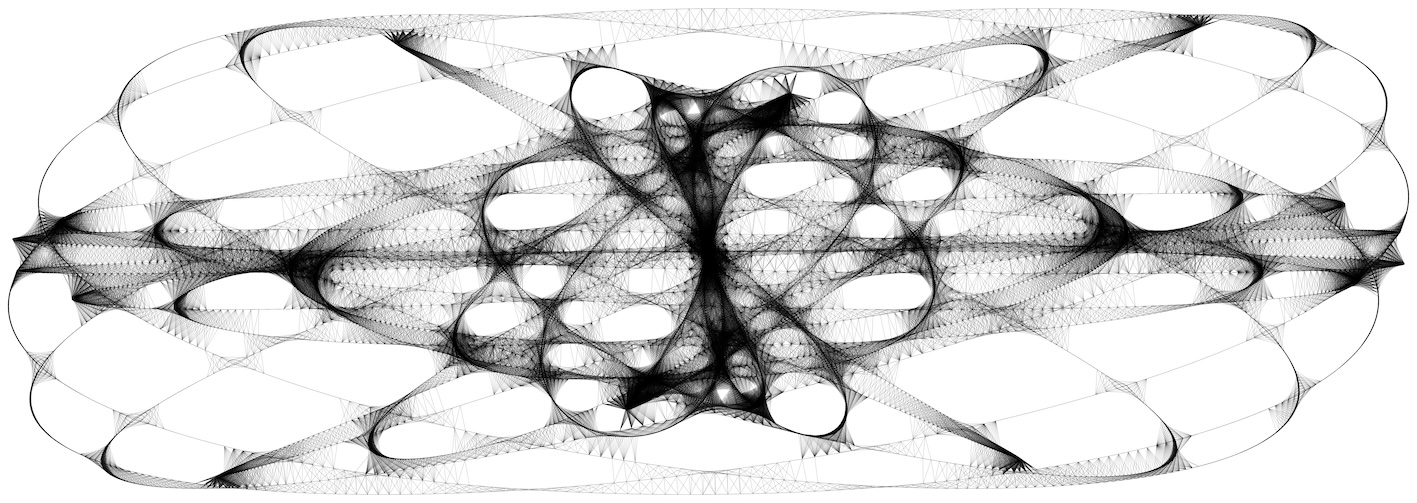
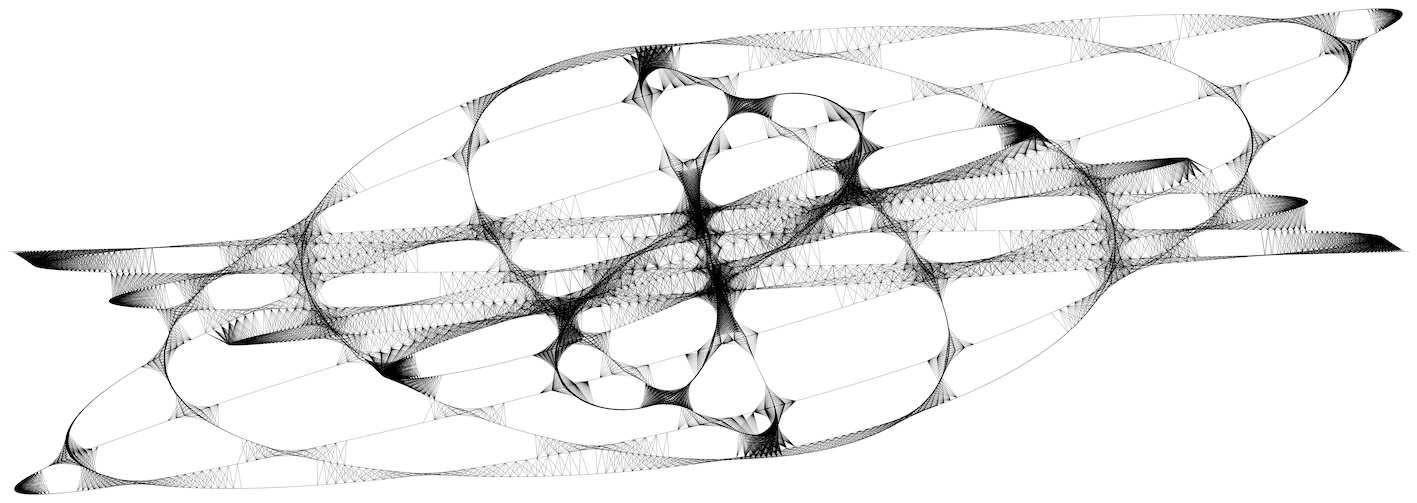
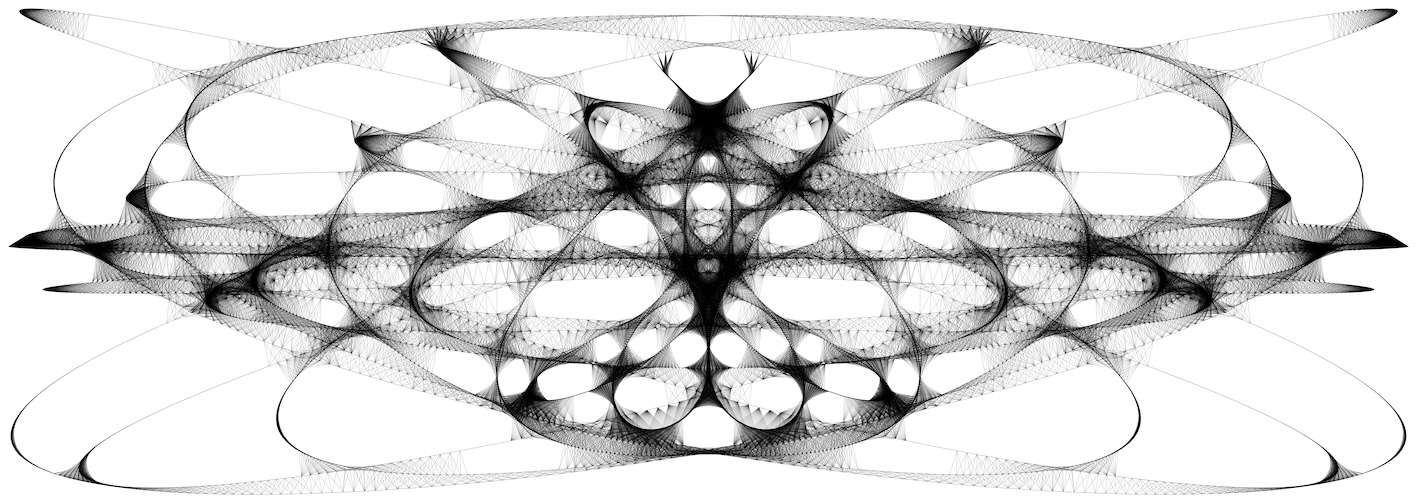
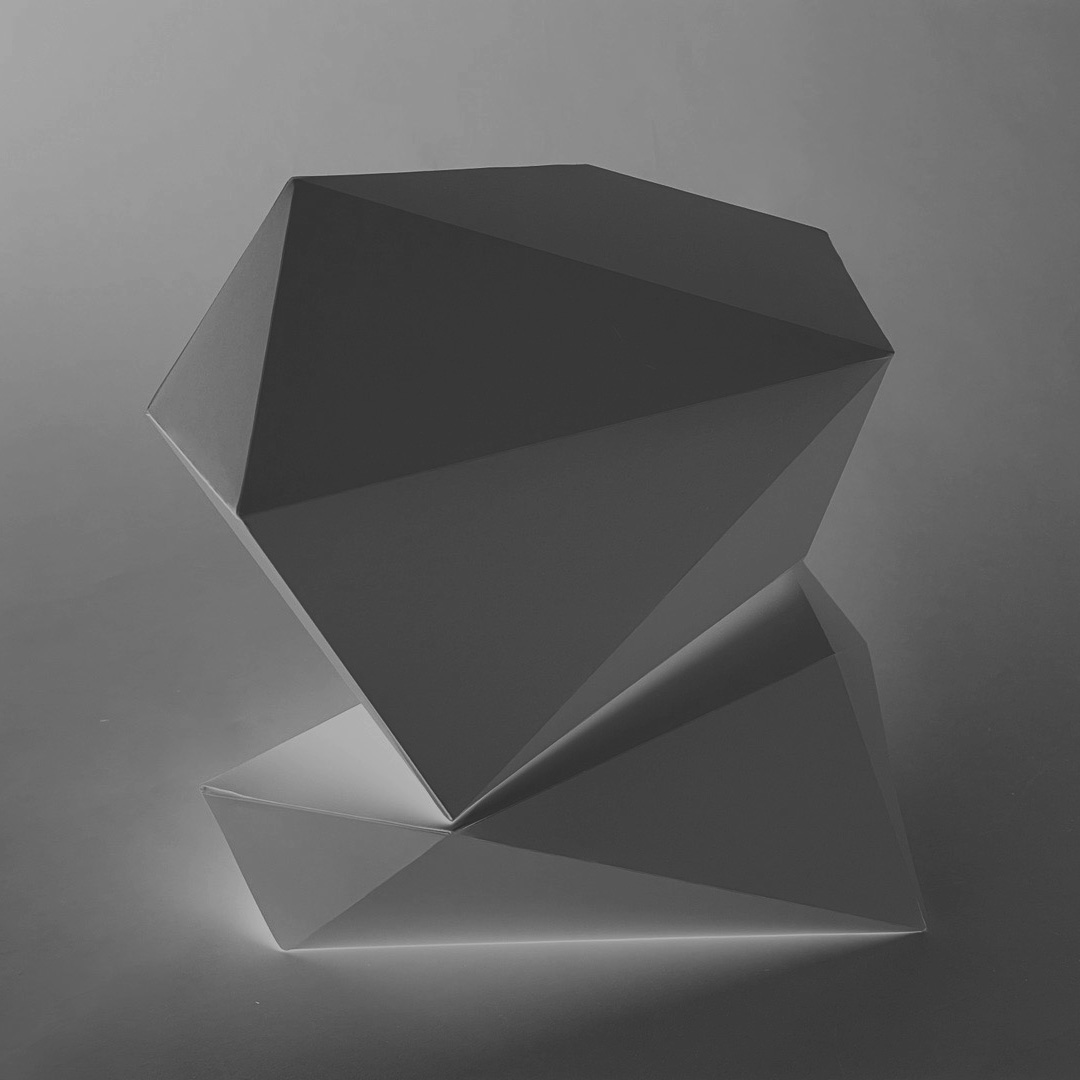
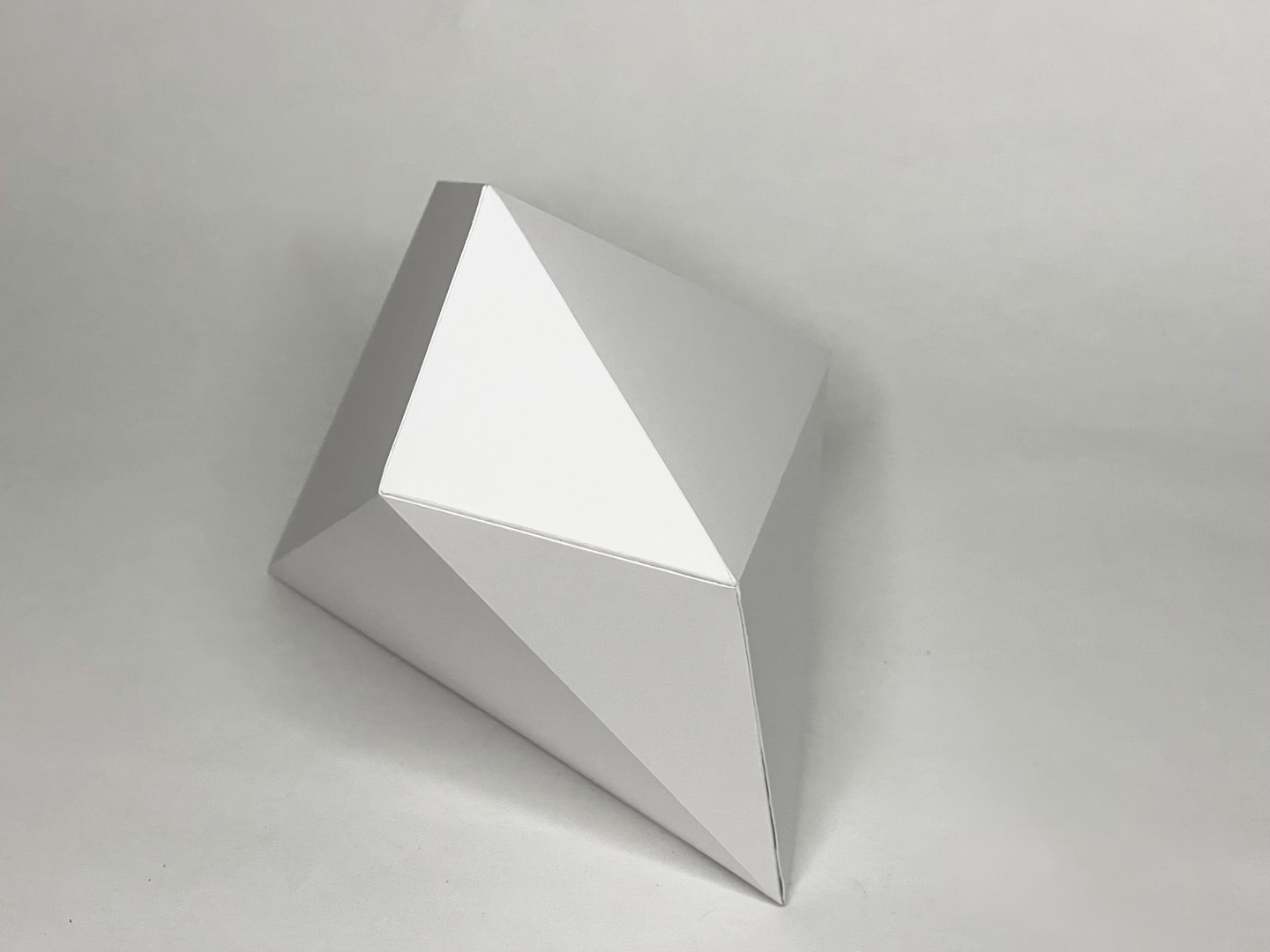
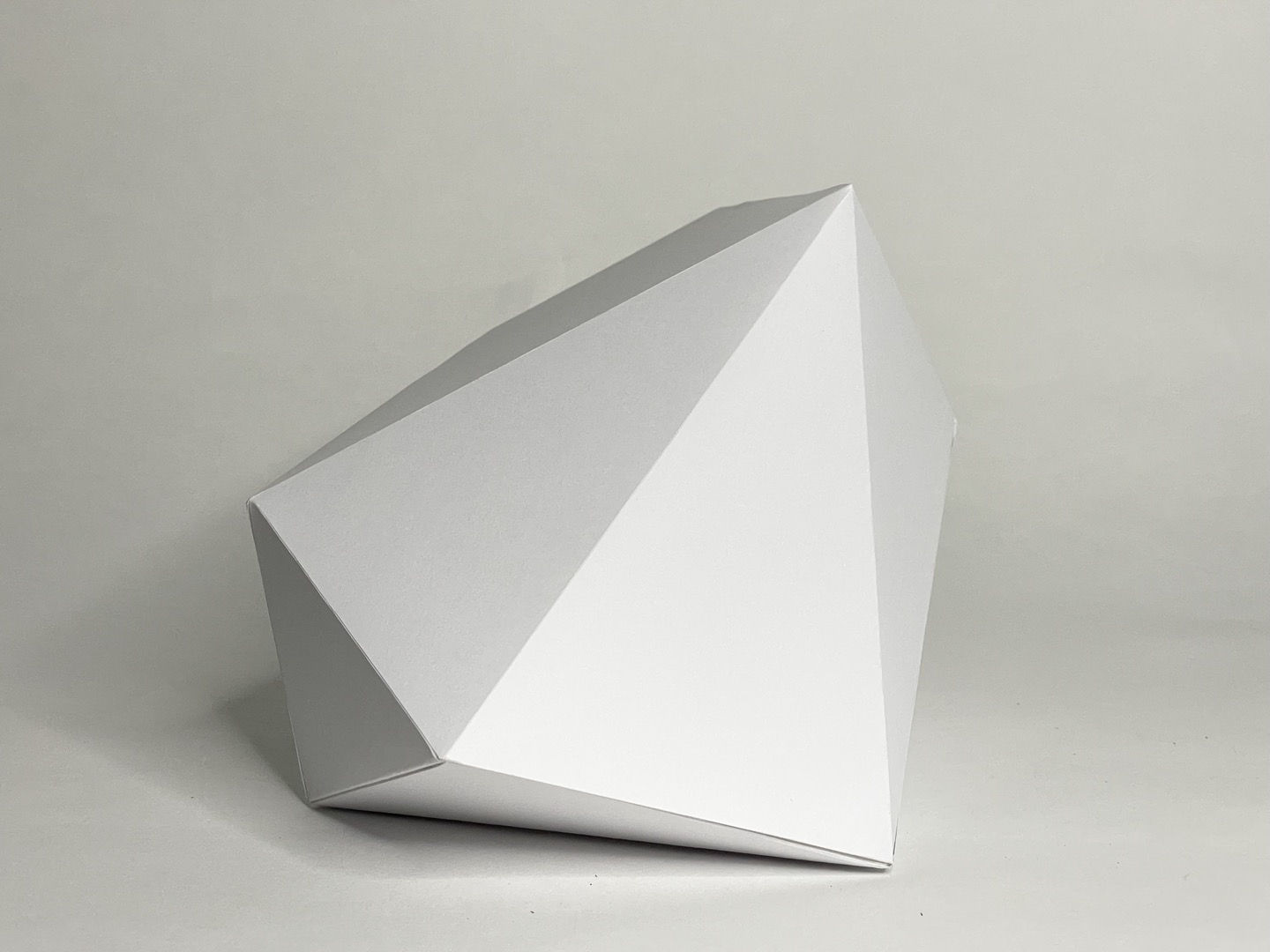
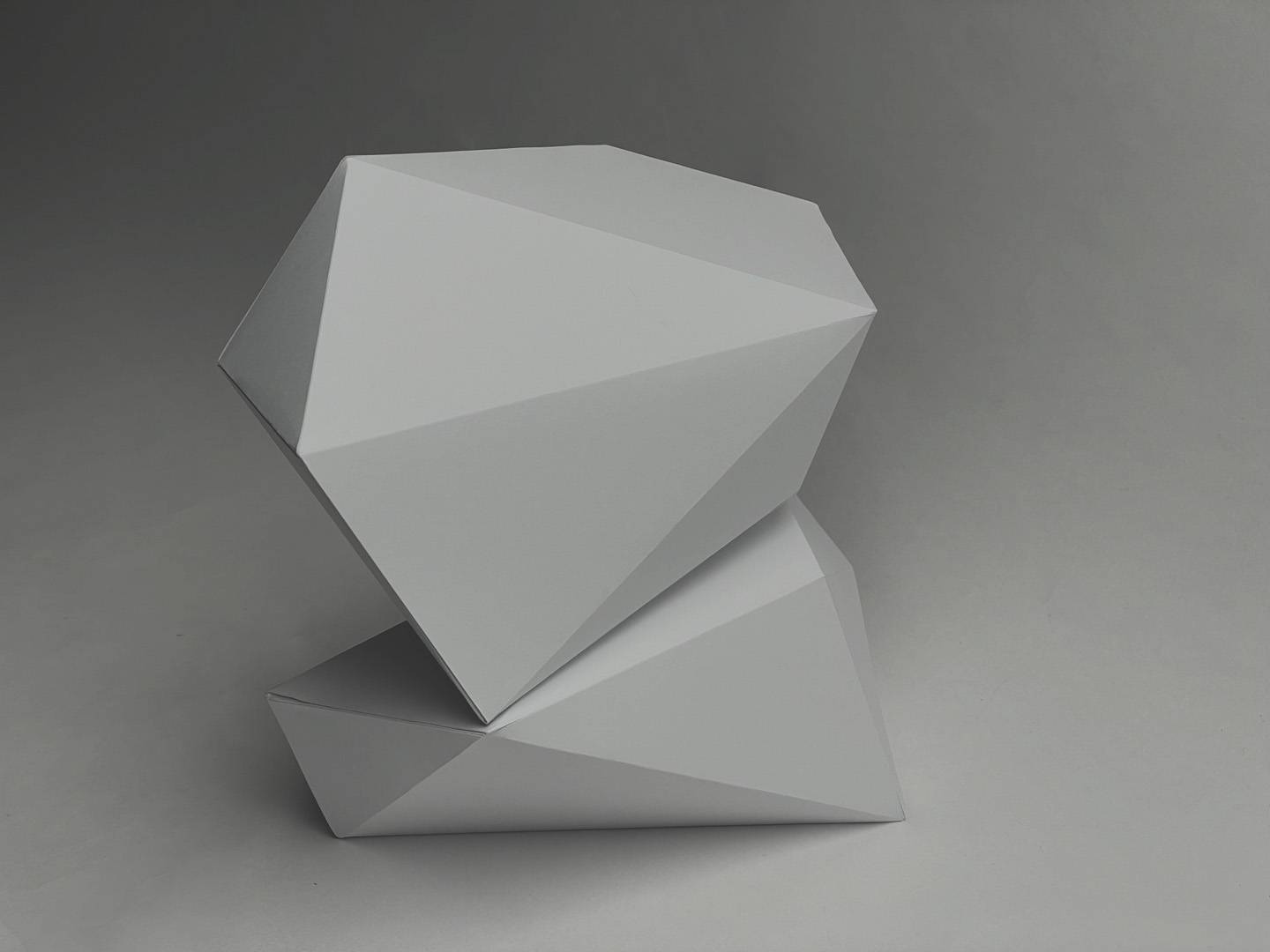
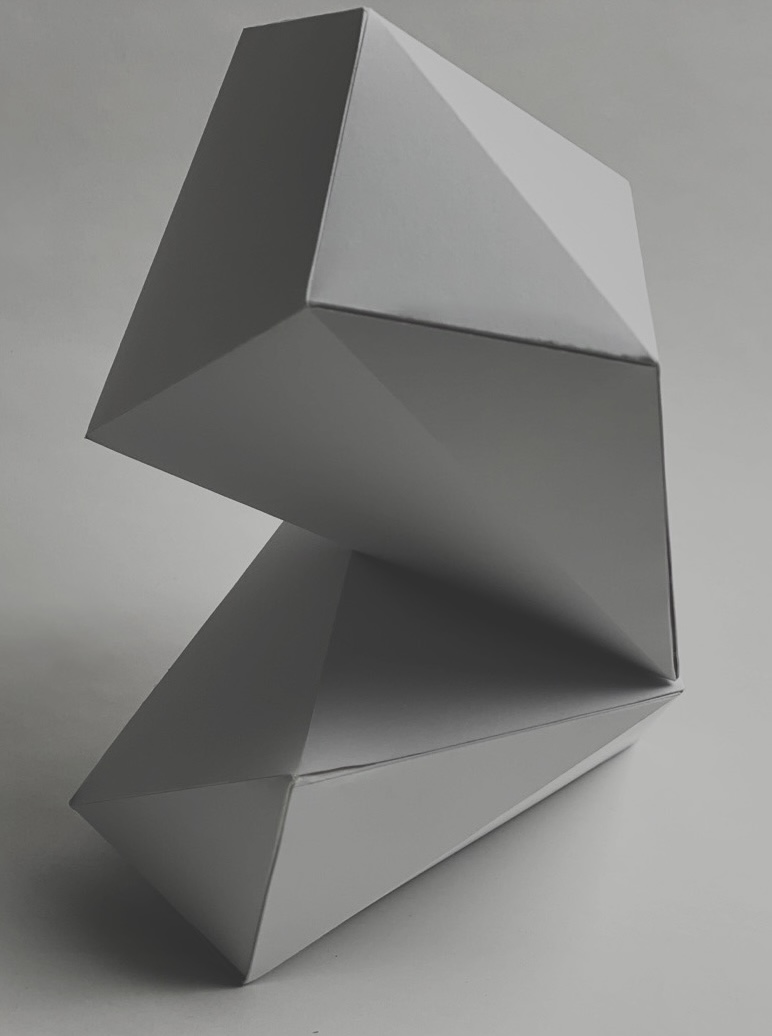
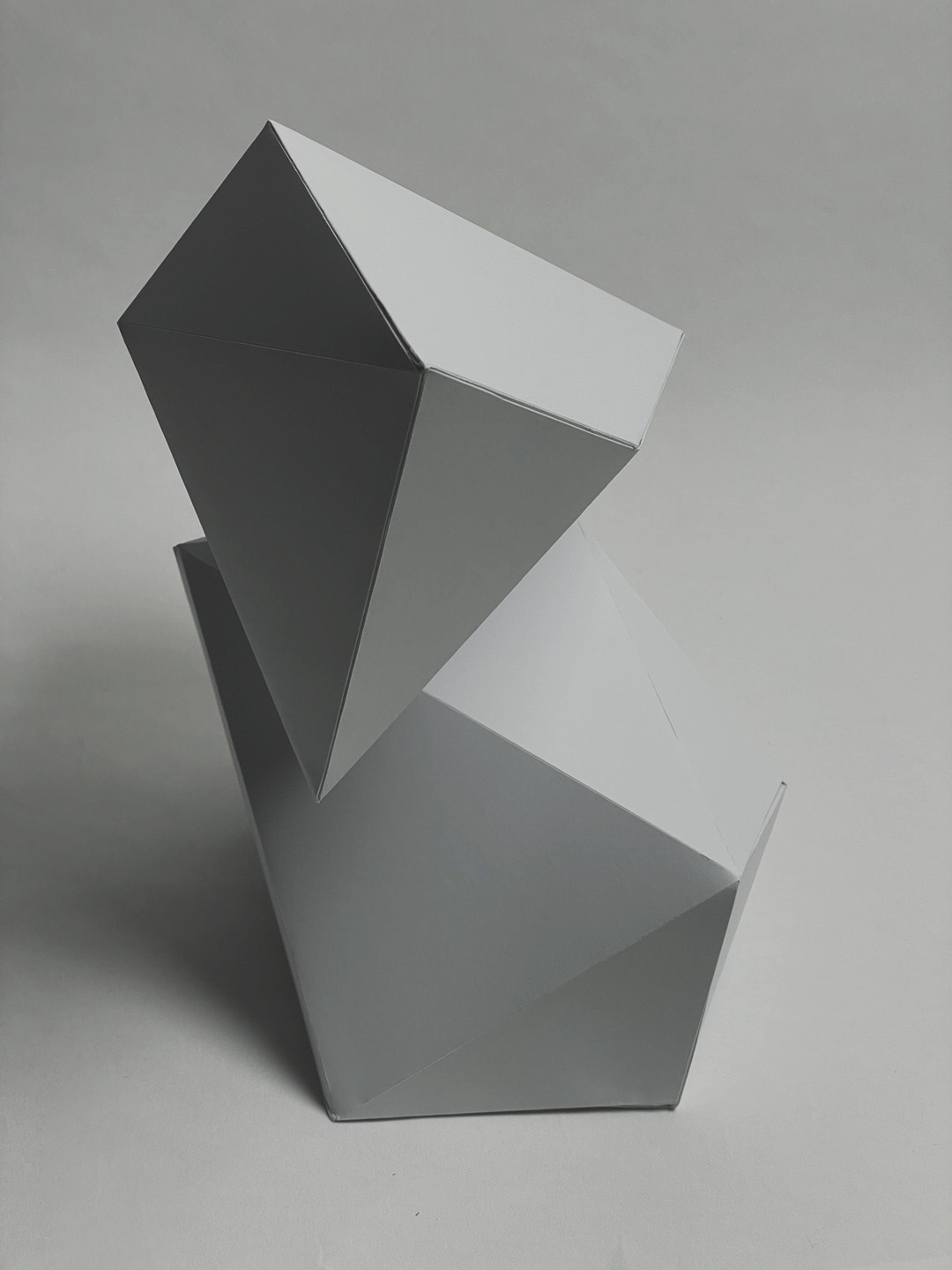
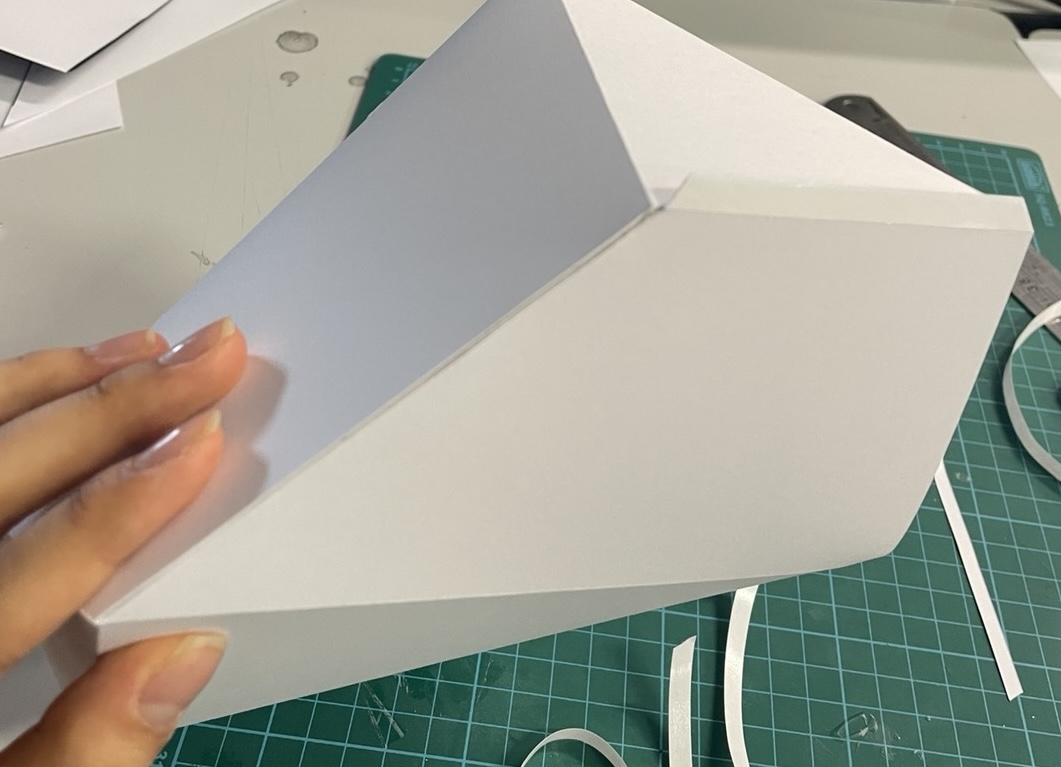
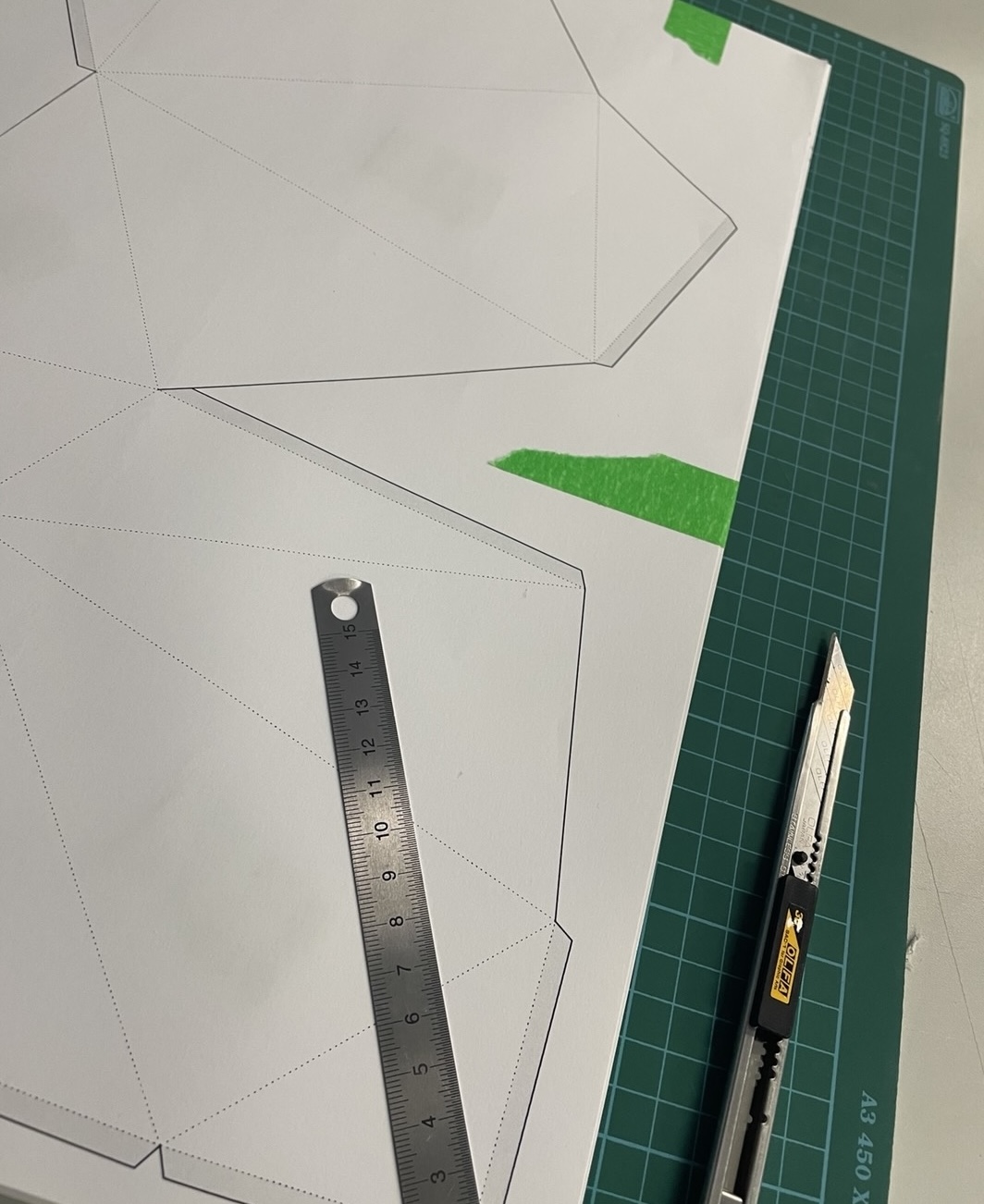
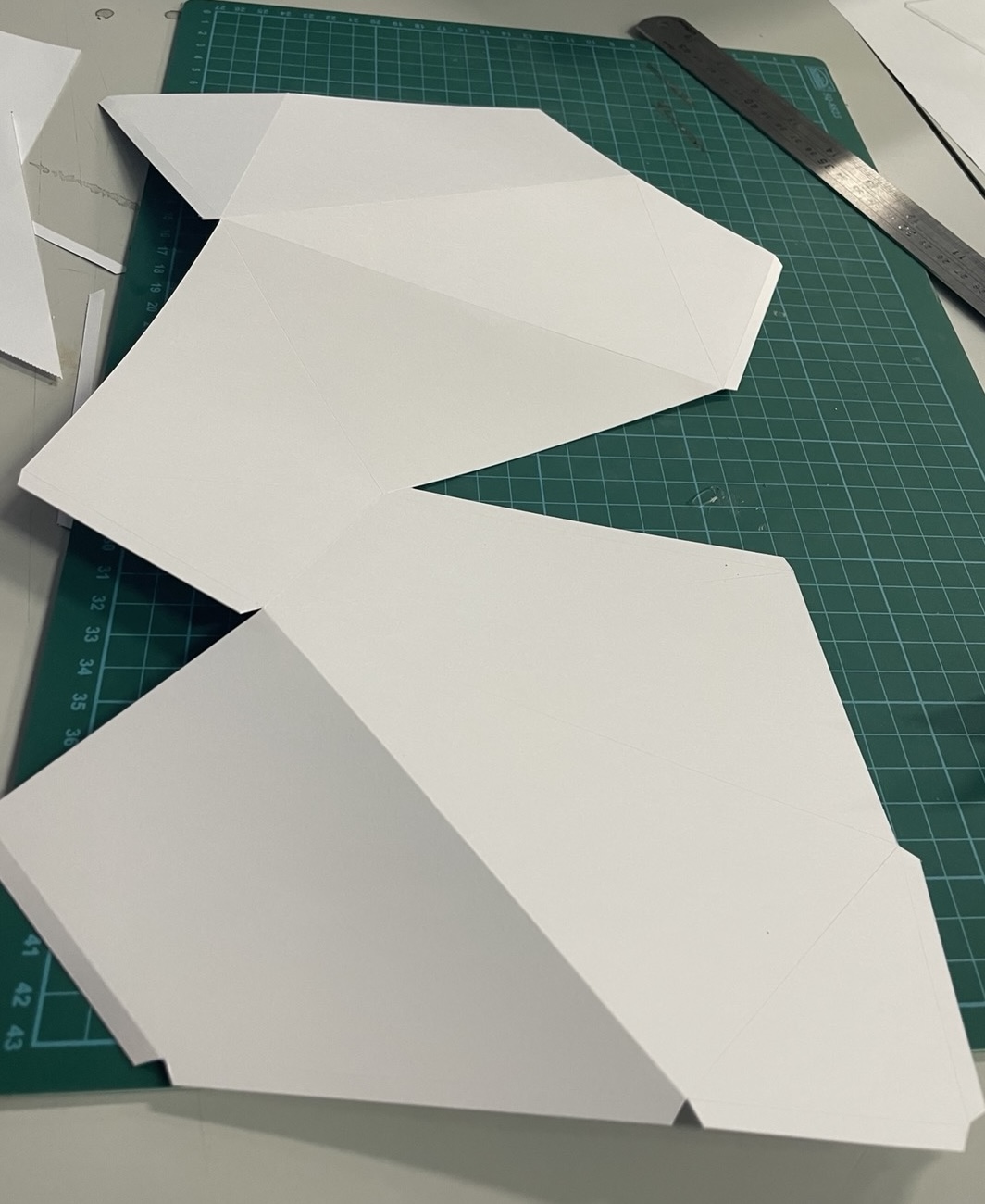
The second workshop, Making with Dhiya, or Code to Thing, is an exploration into the synthesis of digital code and physical objects, bridging the gap between virtual and tangible realms. With a general theme of cosmic dust, we created a 3d paper polygon, from a code that scans all the points and connects them.
I made two different objects to emphasize the meaning that cosmic dust can be turned into anything by fusing, also mirroring the moments of insignificance that shape our existence. Just as cosmic dust particles form the building blocks of stars and planets, shaping the celestial landscape, my creation symbolizes the hidden architects of the universe. The process of infusing my own personality and ideas into this work was enjoyable as well.
First, I made two templates of one narrow, and one wide polygons using p5.js and blender. As a first-time user, I struggled initially with Blender but as I got to know it I realized that it is a very useful tool that I want to learn more about. The next step of constructing the model was particularly engaging, as I was meticulous in my planning of every detail, from the cutting and folding to the order of attachment, to create a flawless final product. By finalizing this workshop, I took photos of individual objects and experimented with different positioning and angles by combining the objects together.
Workshop three
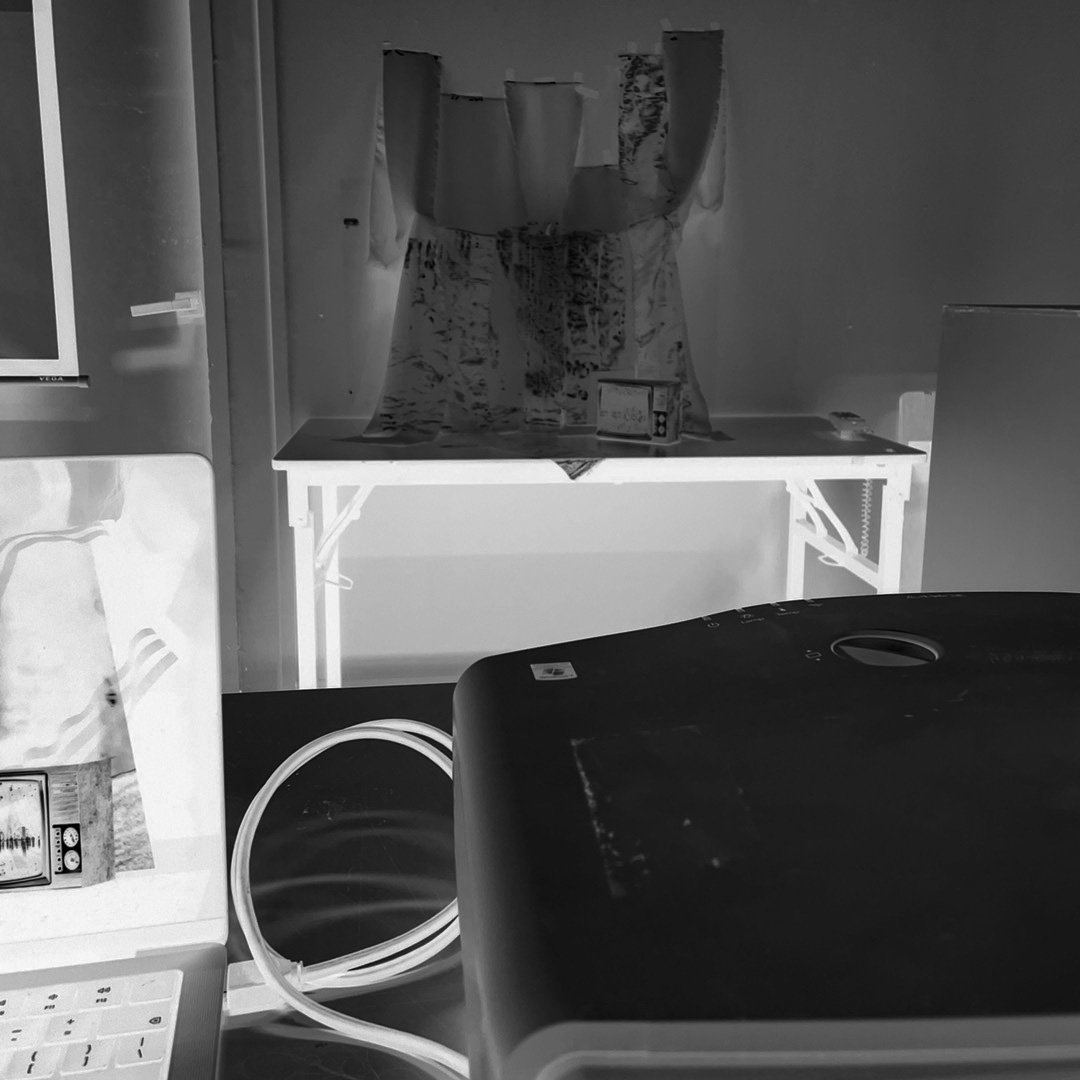
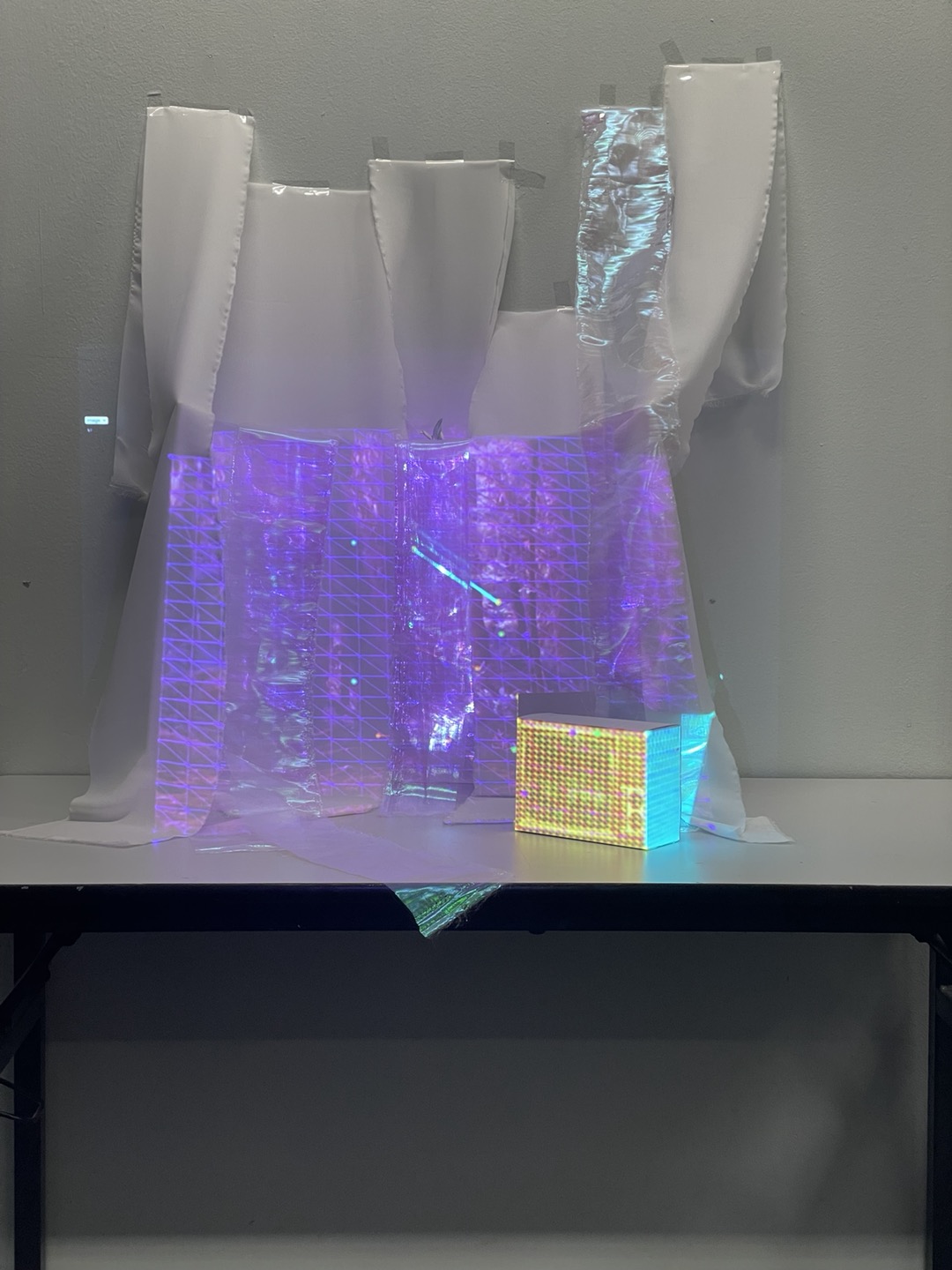
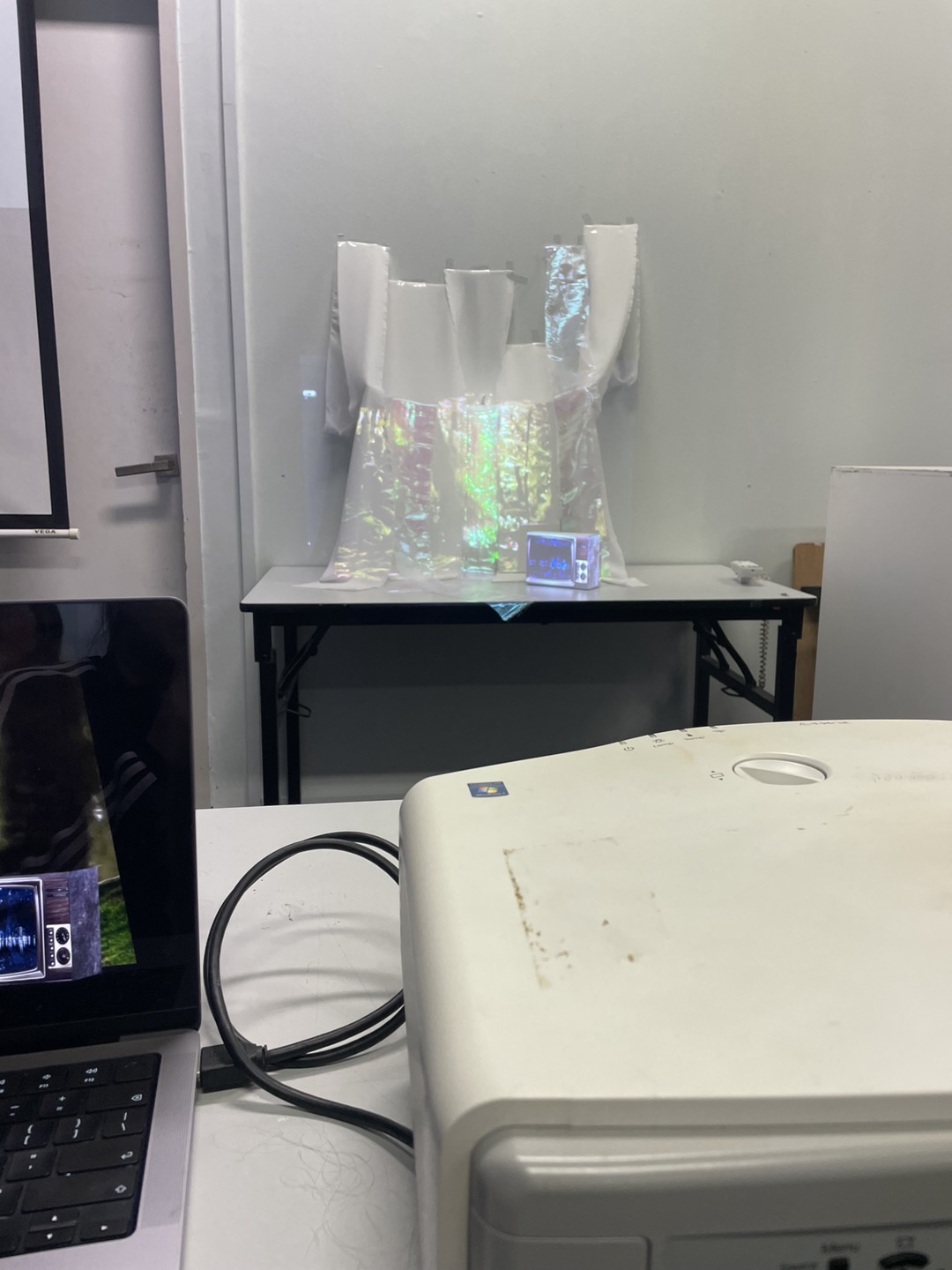
The third workshop with Jo familiarized me with the fundamental applications of projection mapping. Through this interactive workshop, I gained knowledge on projecting and mapping images onto surfaces that aren't rectangular, employing coded, static, and moving images.
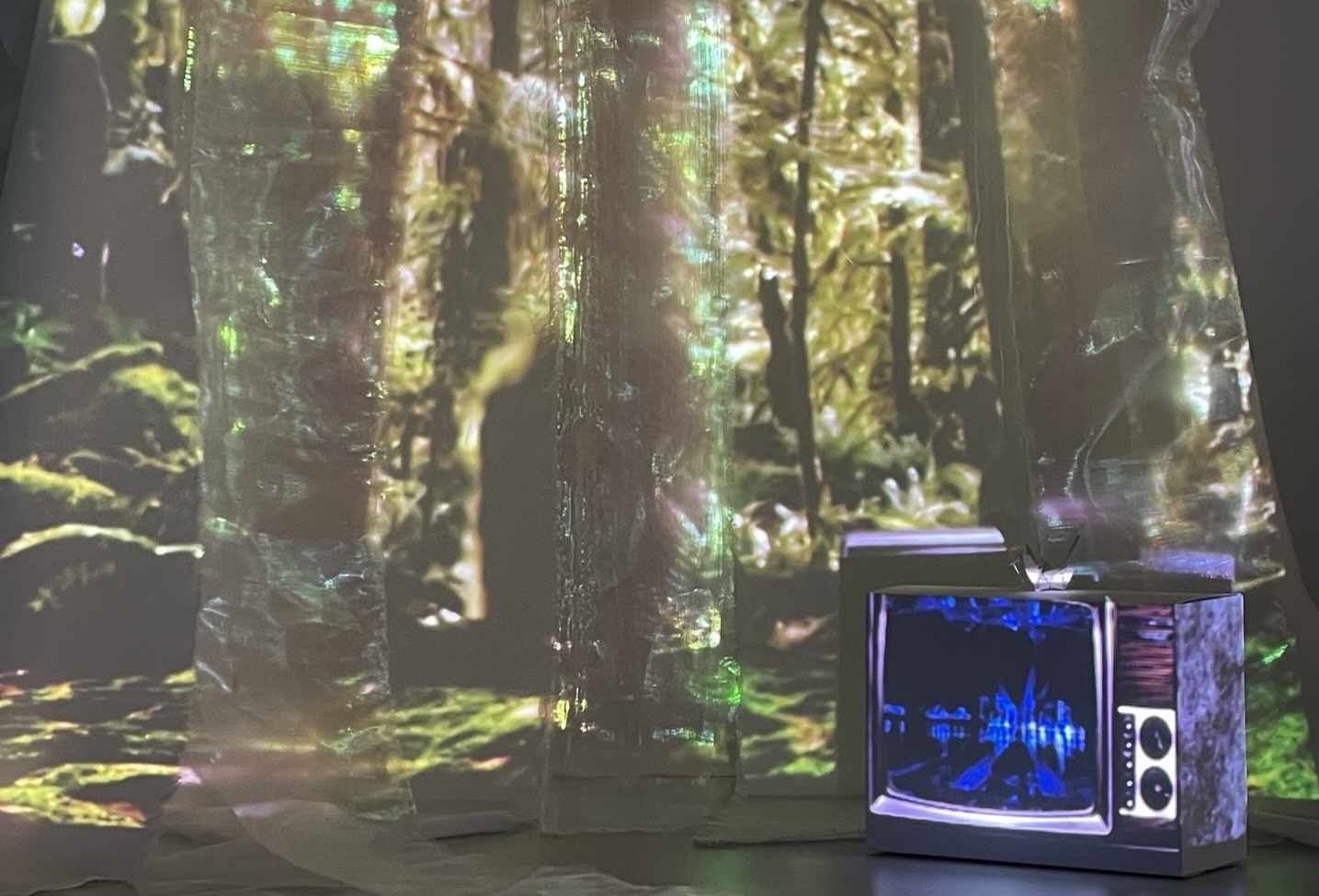
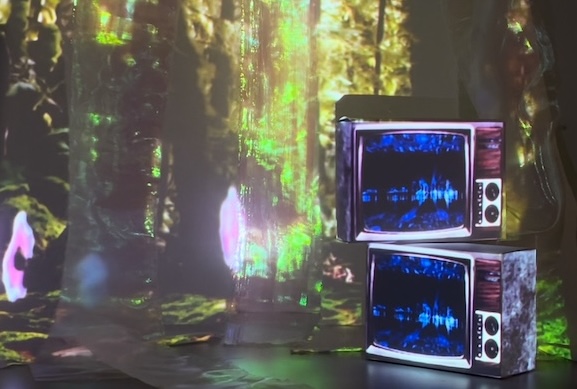
I worked in a group of three with Carissa and Zoe. Initially, our group had a hard time coming up with one idea because each of us had a firm idea of what we wanted to do. However, by showing each other references talking about what we could do, and consulting with Jo, we were able to gather the things we all wanted to do the most and the most feasible ideas and combine them into one. As it is video art, we decided to use TV visually, inspired by artist Nam June Paik, the father of video art.
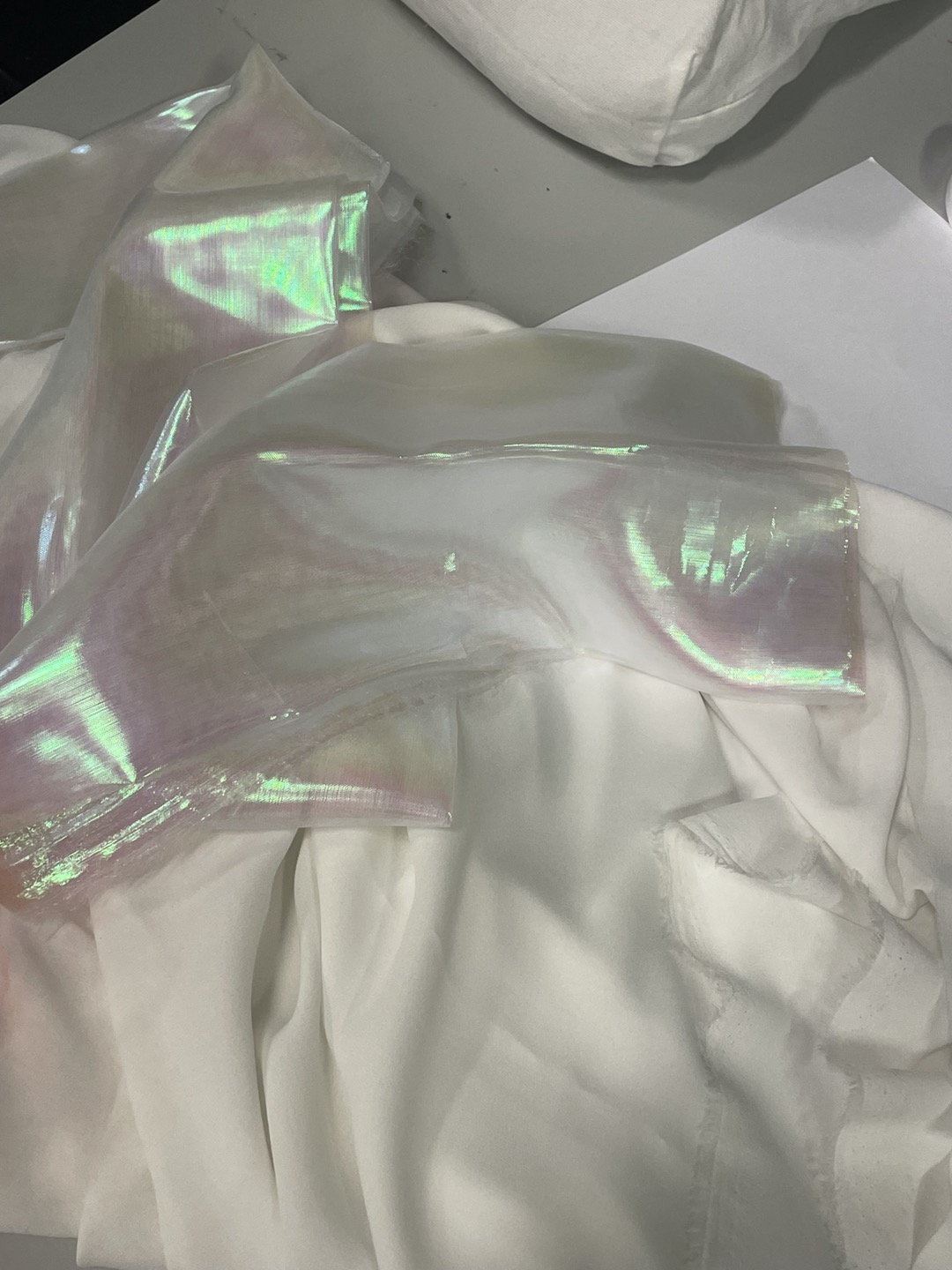
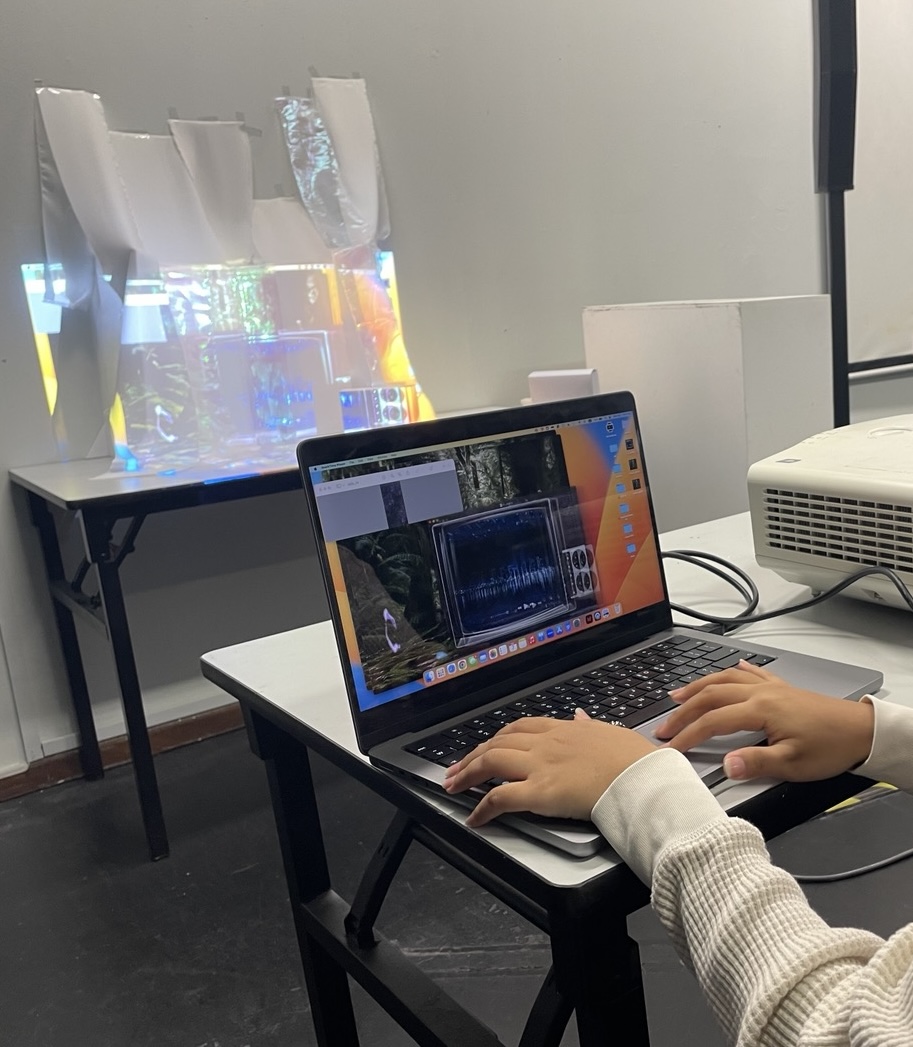
During the last process, we faced some challenges with the fabric constantly sinking, because of its weight. We could solve this problem neatly by supporting the fabric by attaching it to the wall. I was also confused about the process of changing and inserting the video into codes at first. After helping each other and trying, our group was finally able to produce a satisfying result. It even felt like a fun game shooting the beam by matching the images in the box and fabric one by one.
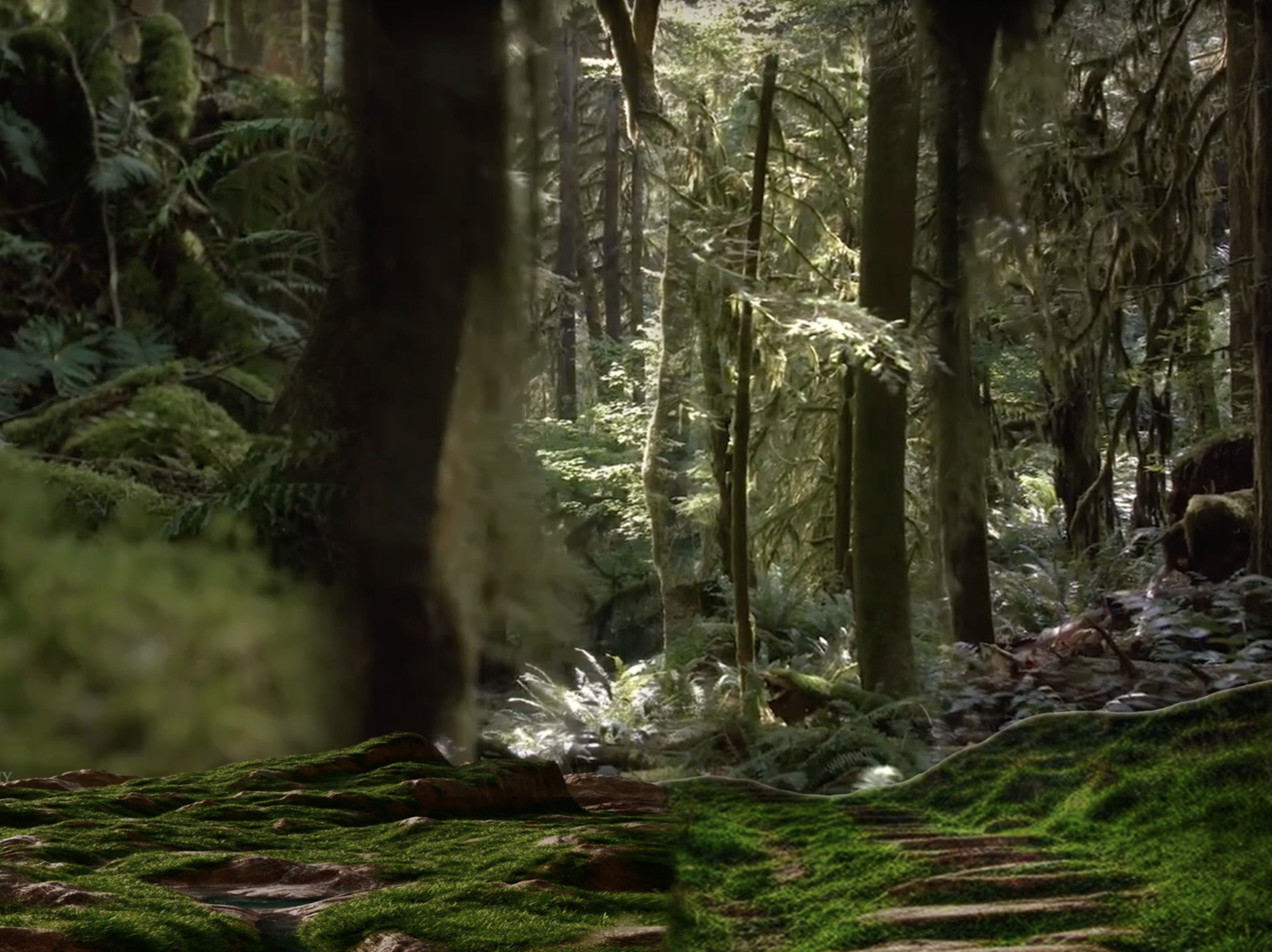
Our final video features a light moving back and forth between a forest and a TV displaying a city within it. To create an enigmatic visual, we used fabric instead of paper, and I believe this choice made our work stand out from the rest.

Workshop four
Last Workshop, Physical Computing is the practice of integrating computers with the physical world. This workshop allowed us to experiment with electronic input and output mechanisms. Using provided materials and electronic components, we designed a basic physical interaction that showcases how a physical input can activate a digital output, and vice versa.
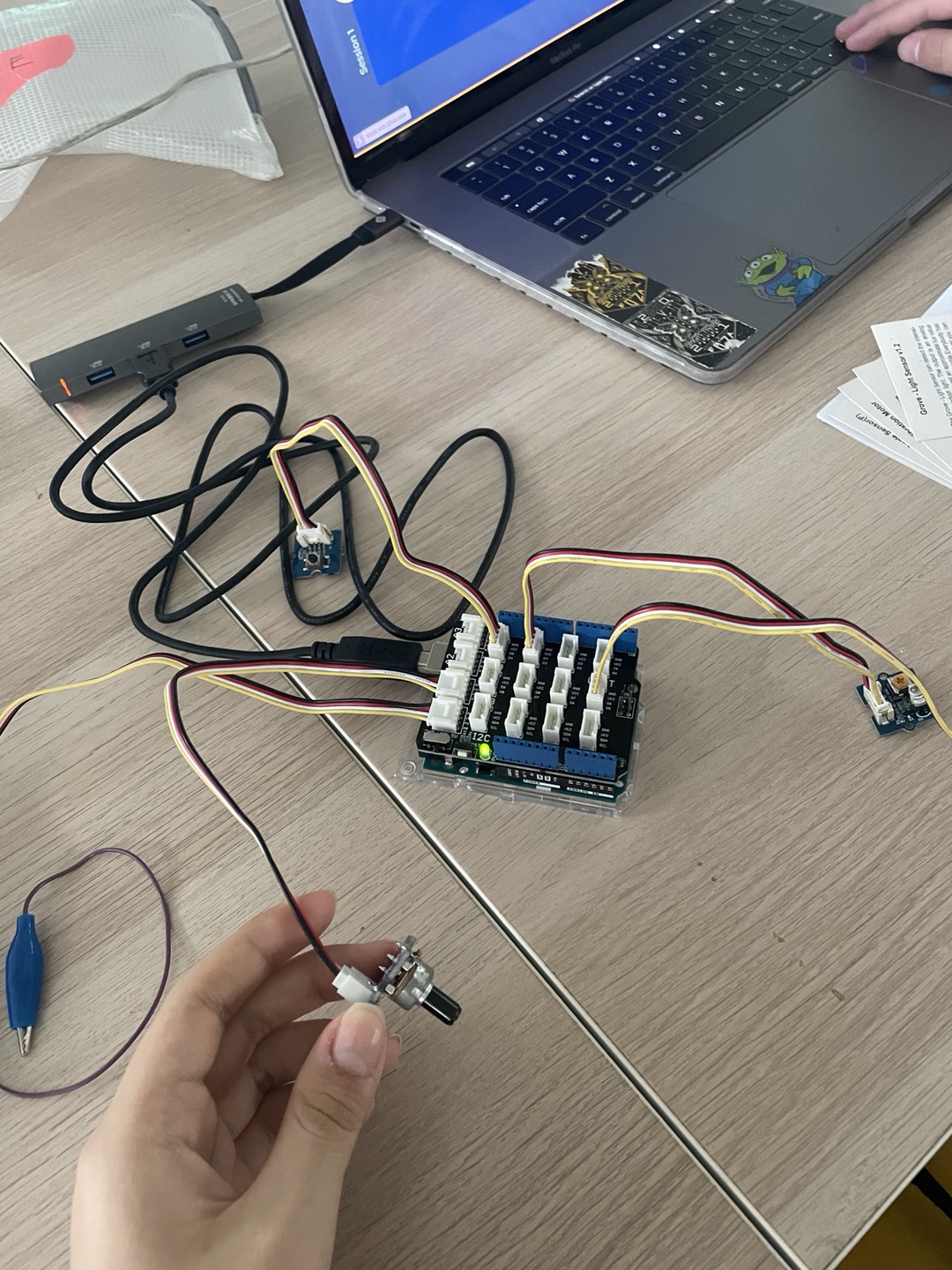
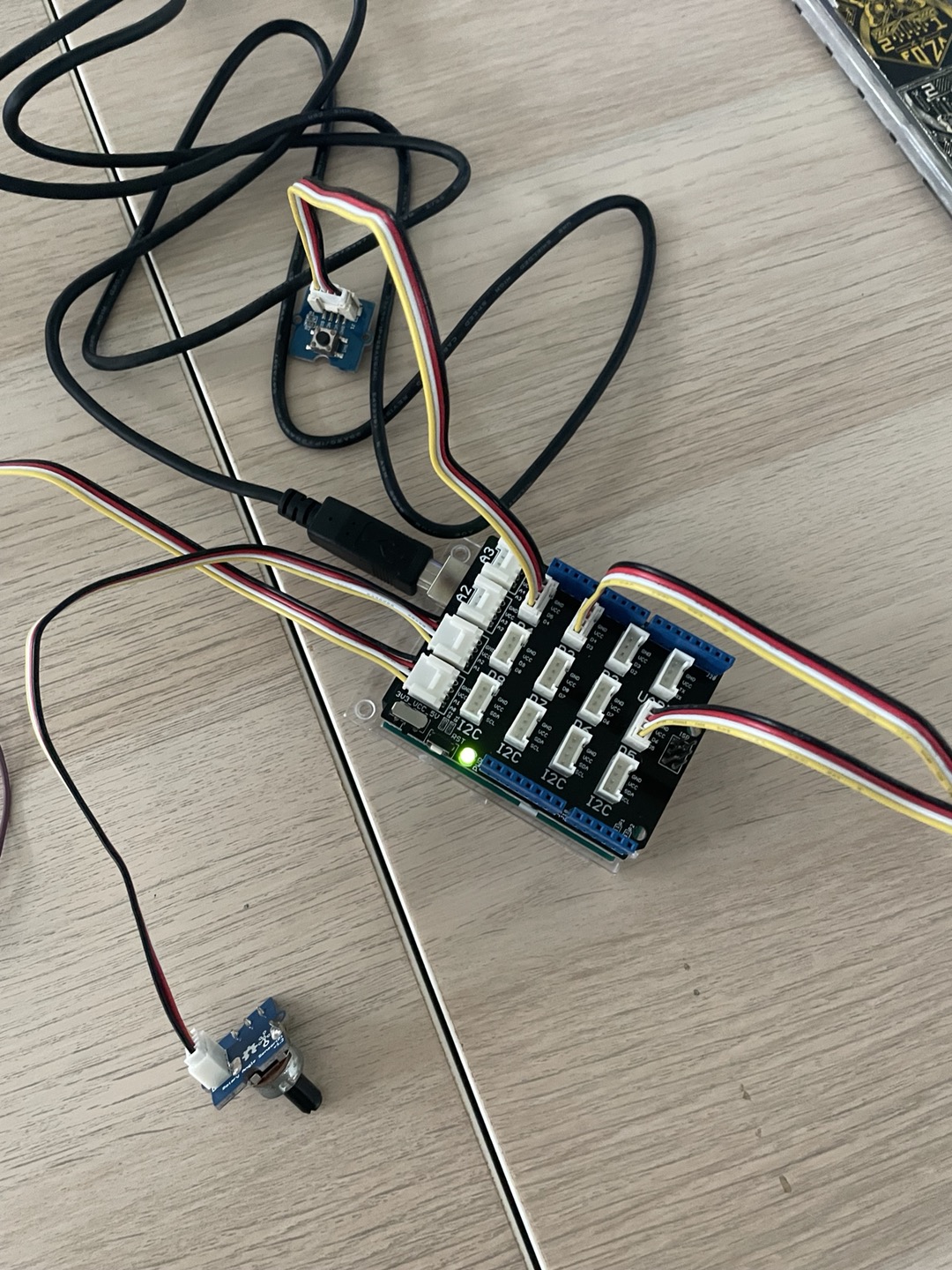
I worked in a group of two with Jeremy at this workshop. In the first session, we were provided with a compact electronics prototyping kit that consisted of an Arduino board and a Grove Shield. We utilized this kit to experiment with basic inputs and outputs such as buttons, knobs, and LED lights. Though this was unfamiliar territory, it was fun to explore how codes can be used to create tangible experiences.
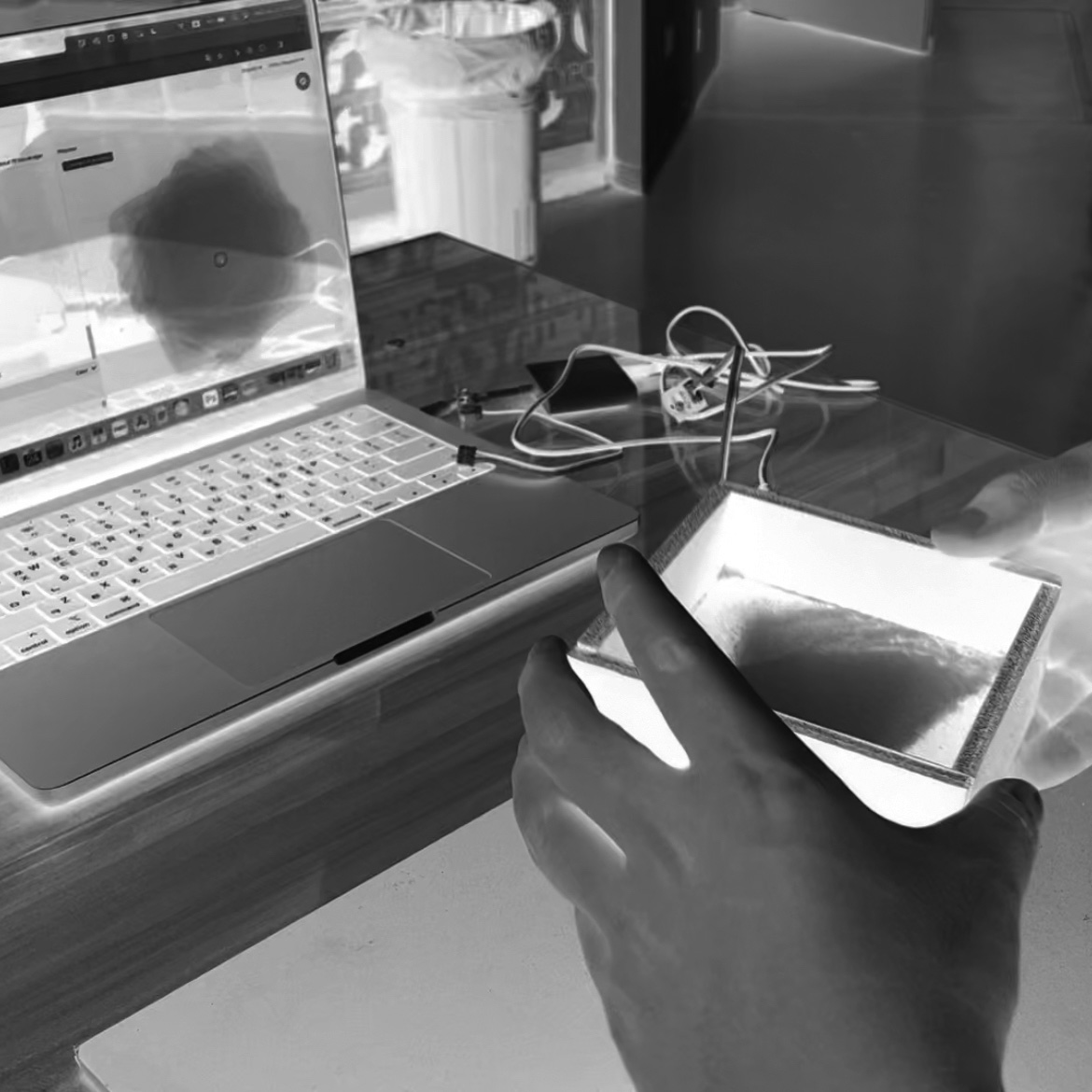
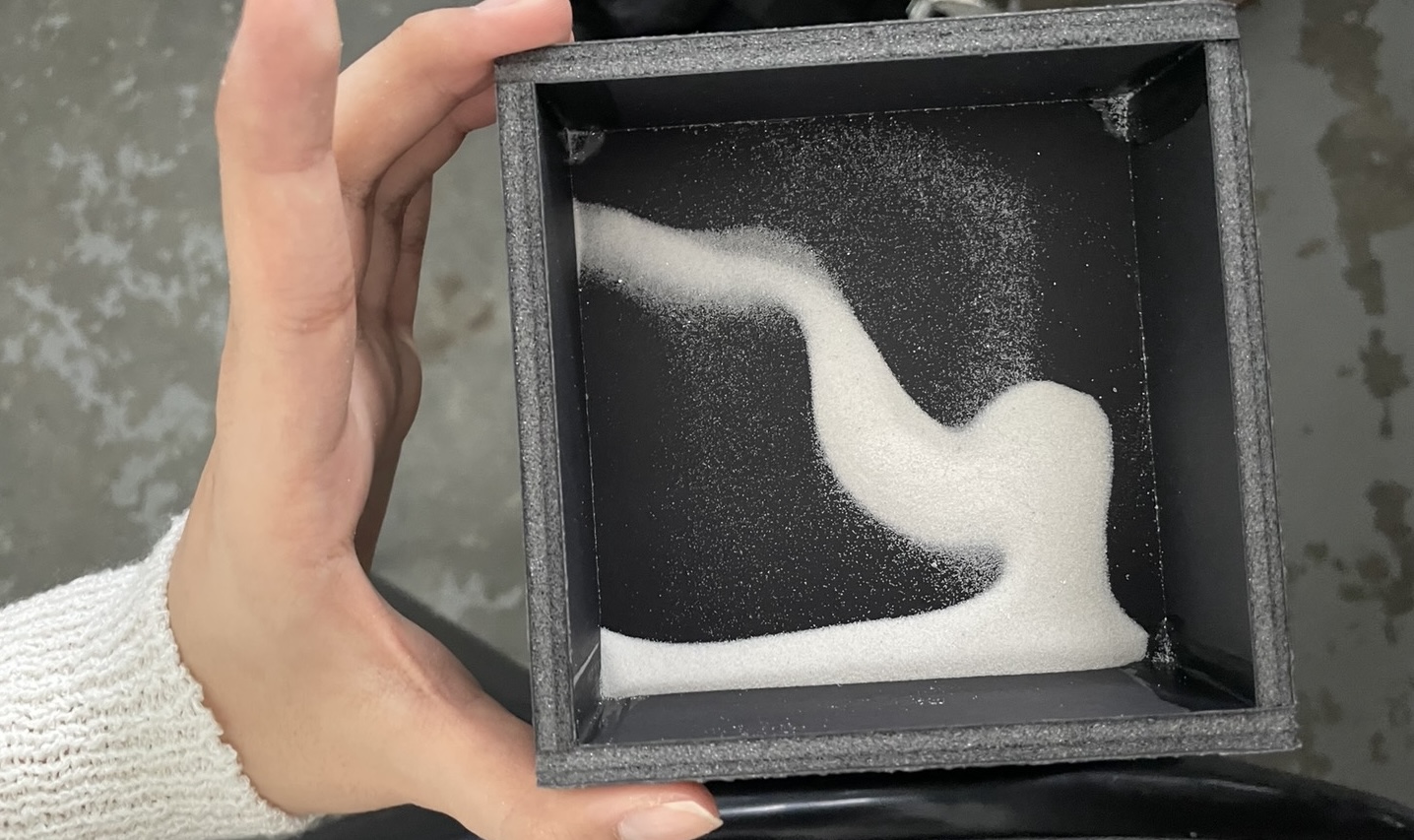
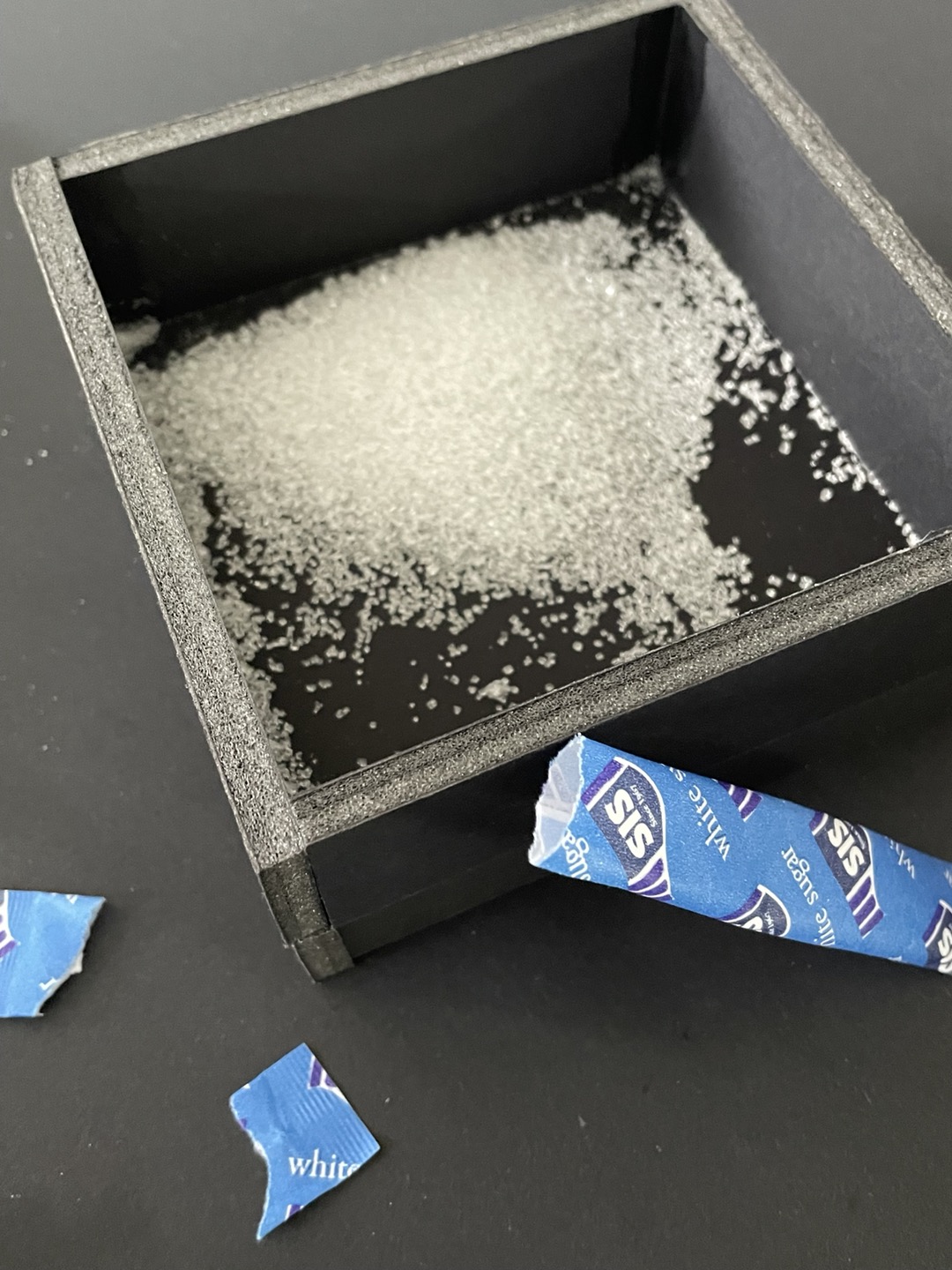
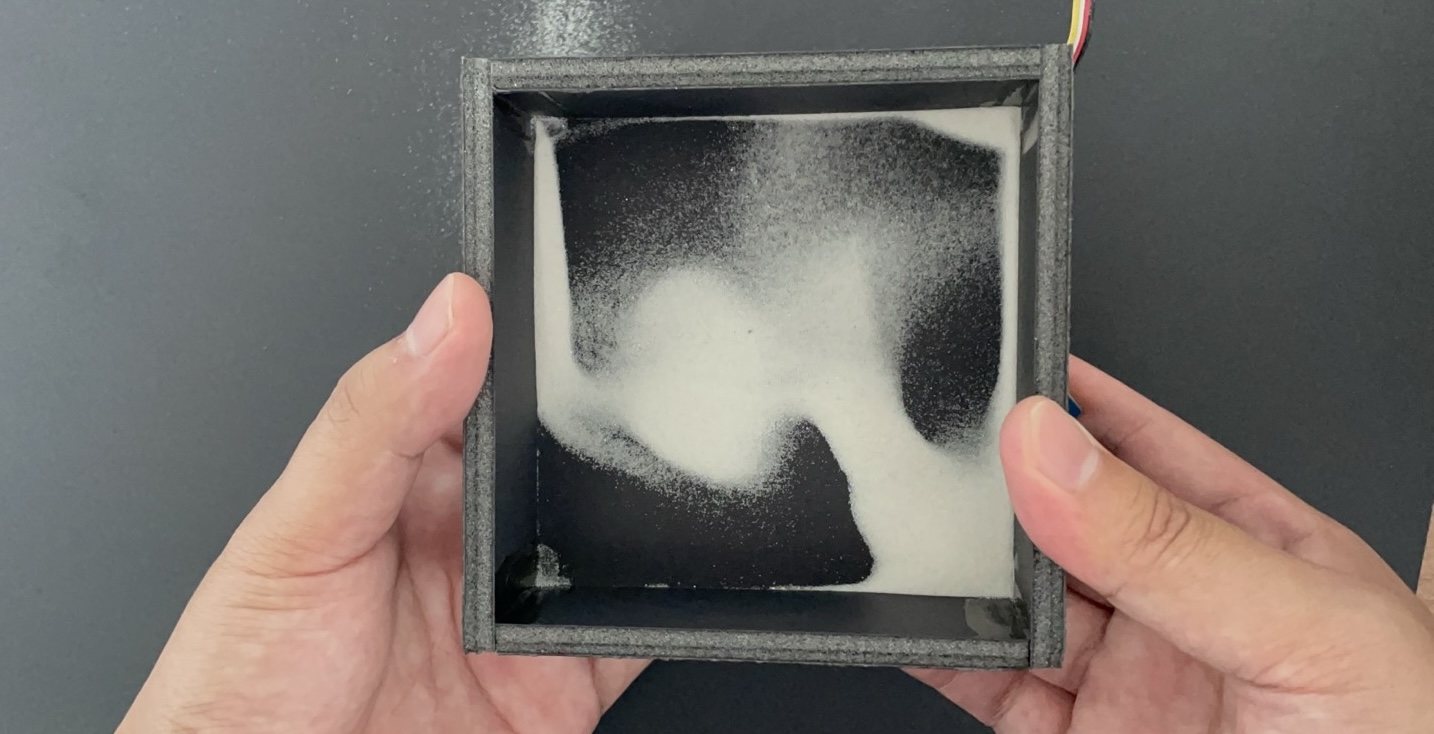
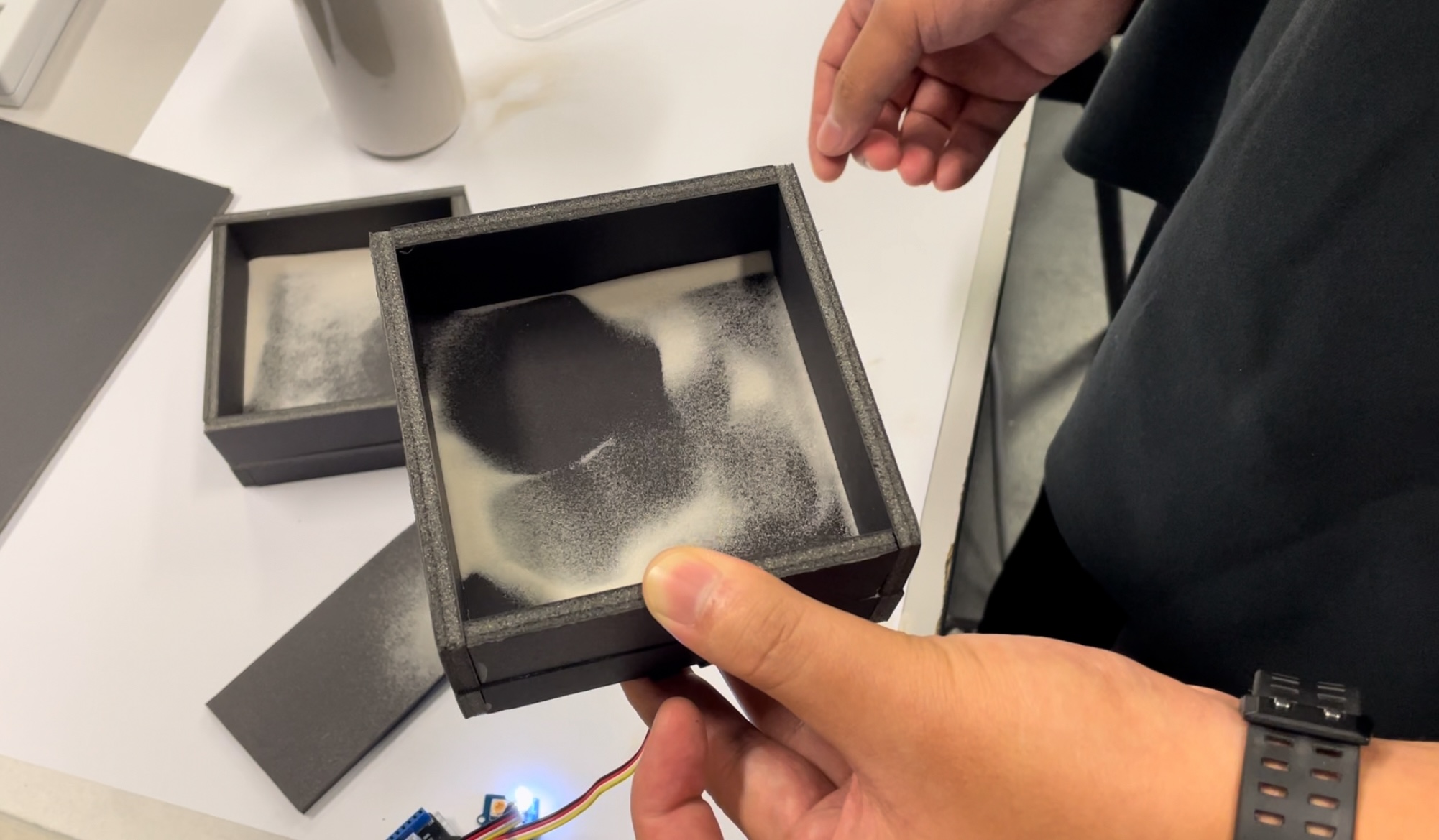
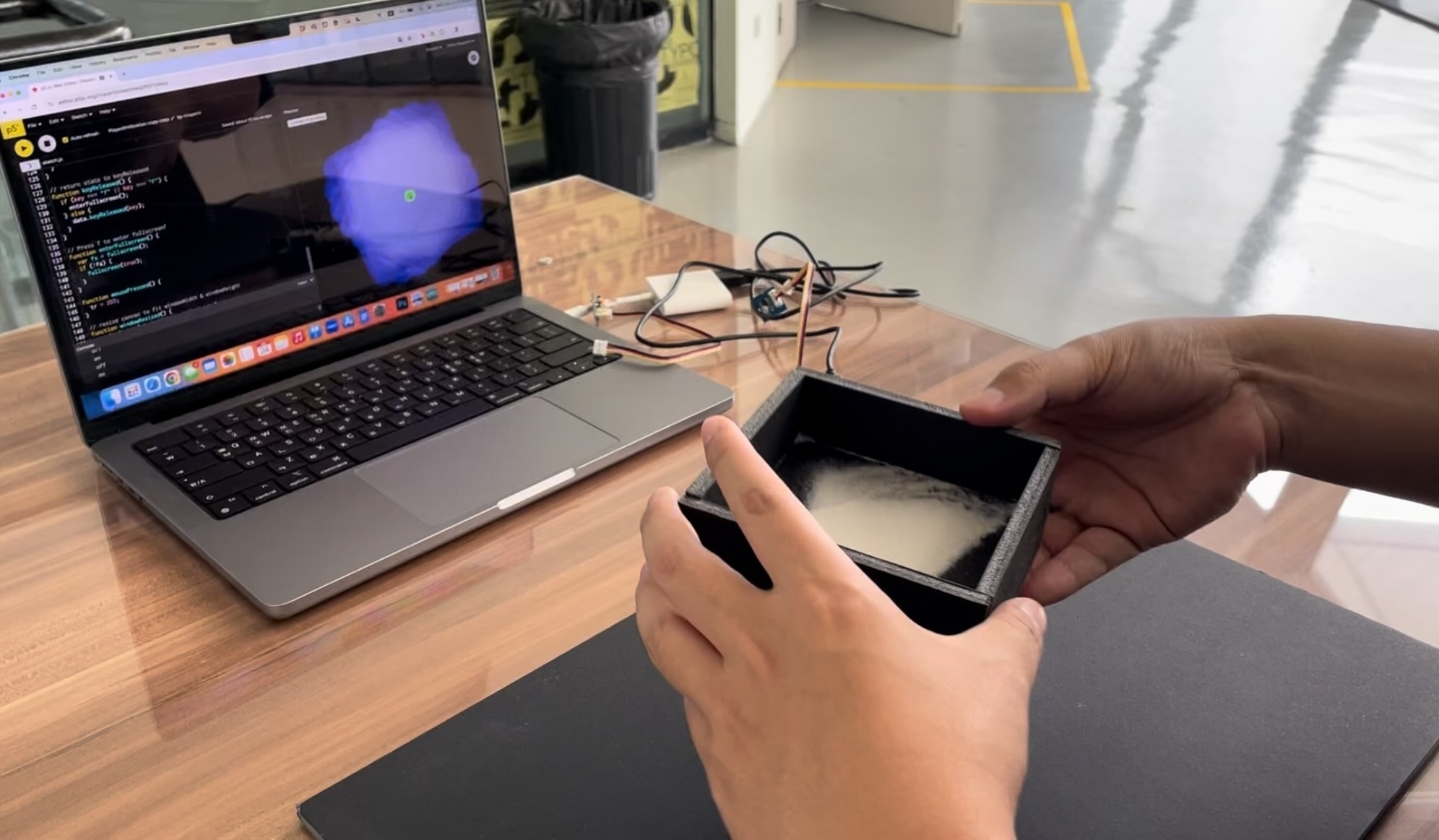
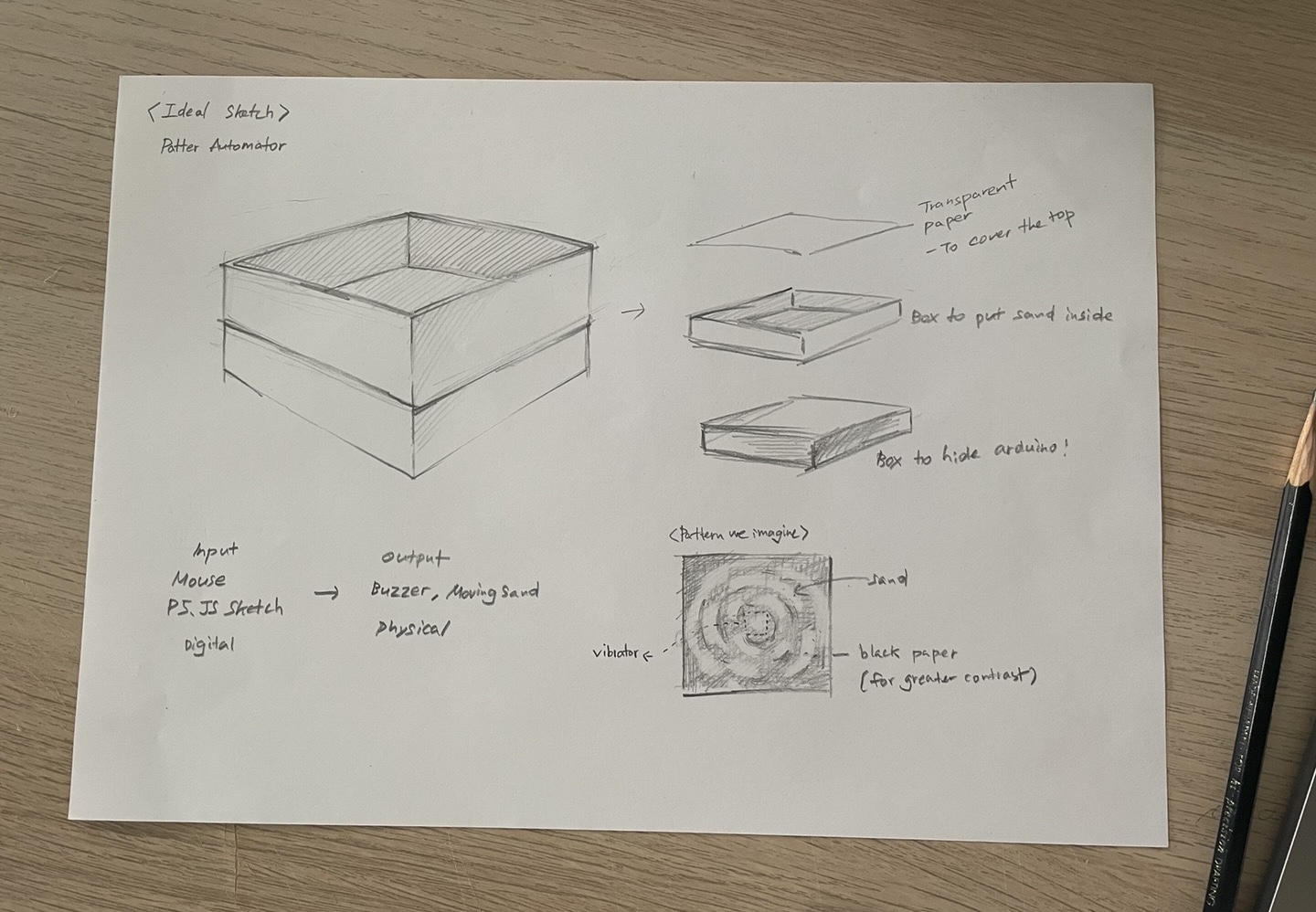
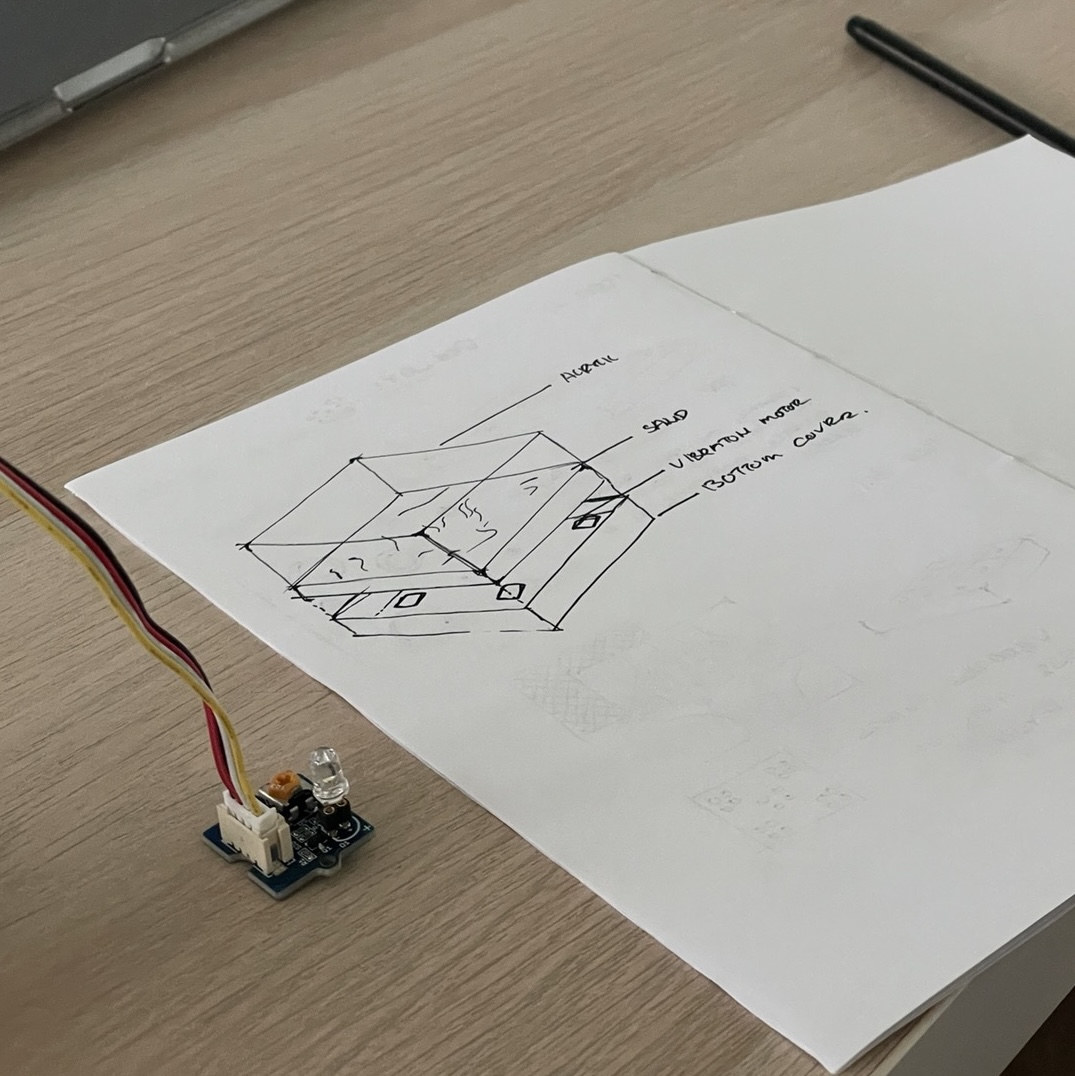
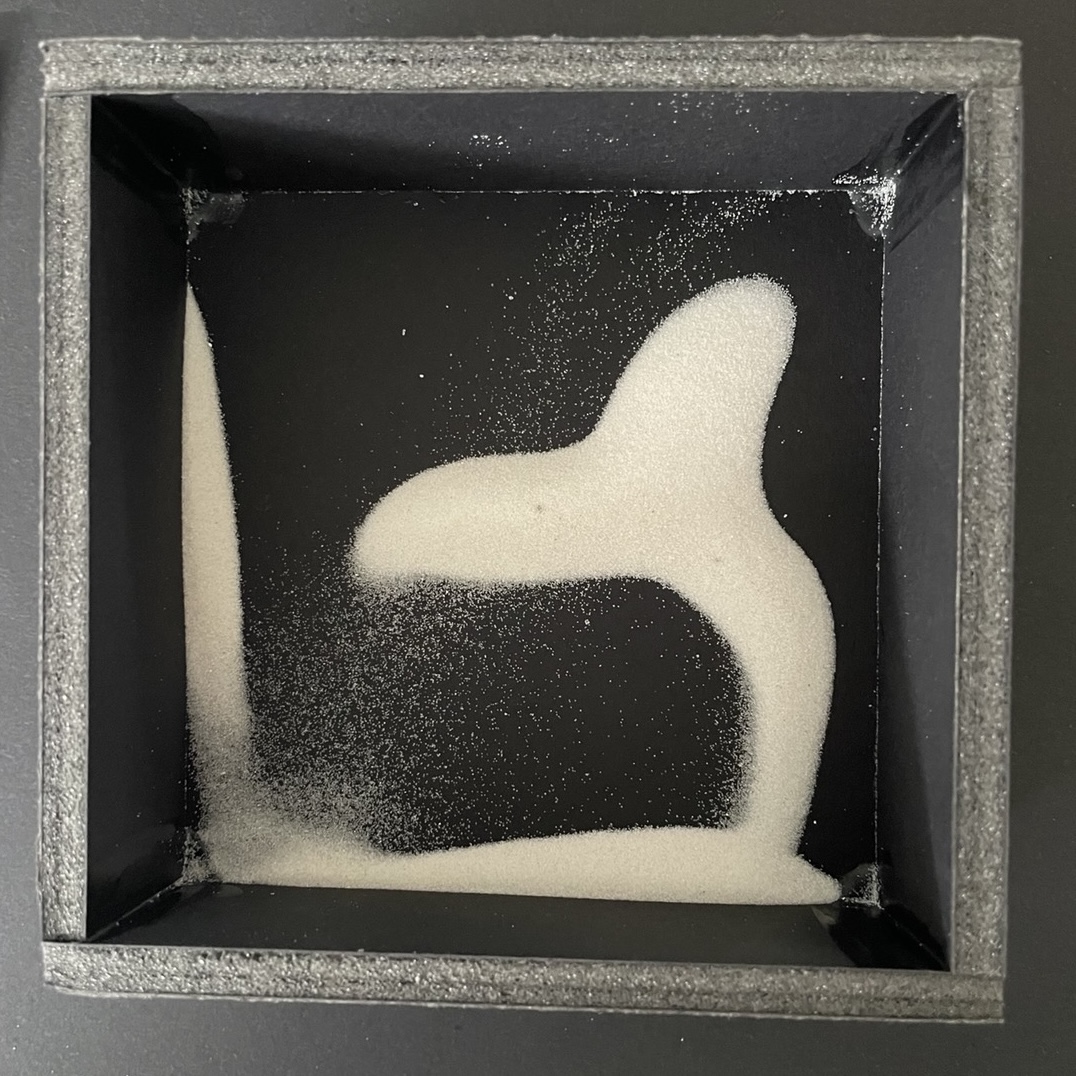
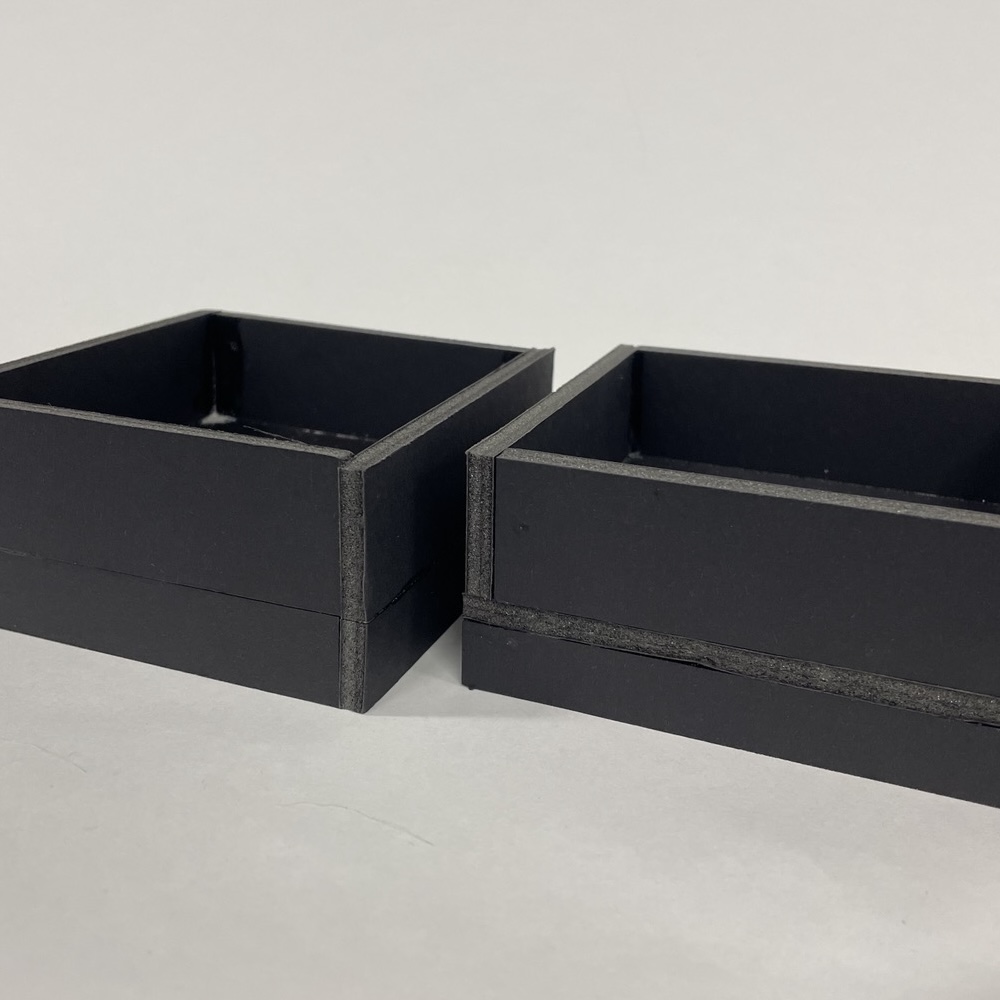
My group came up with the idea of creating a machine that creates patterns using sand and a vibrator, Pattern Automater. If the user controls the vibration using the mouse in p5.js, the vibrator moves the sand in the box automatically, to form various unexpected patterns.
During the process, we faced some challenges such as initial complex ideas, leaks of sand, and unstable vibration. However, the problem-solving process and some accidents we went through made our outcome stand out. This workshop with Syaz also allowed me to learn how accidents can create more dramatic results while interacting physically with codes.
“I don’t make art, art makes me”
- Nam June Paik (1932-2006)
Conclusion
What have I learned over the course of this semester?
During the last semester, I was introduced to the fundamentals of coding. However, this semester, I delved deeper into the subject and learned how to bring my code to life in the physical world. I was pleasantly surprised to see that the results of my work could be felt and experienced in tangible ways, beyond the confines of a computer screen.
I used to believe that coding only involved creating complex mathematical algorithms that existed solely within a computer. However, I have come to realize that coding can be used to create immersive human experiences through various mediums such as projection, printing, making, and website design. It was truly incredible to interact with my creations and feel as though I was a part of them. This experience has helped me become more familiar with code and its capabilities.
Moreover, while leading several workshops, I had the opportunity to advance my coding skills and write more complex codes. I learned to use a variety of tools including p5.js, Arduino, blender, HTML, and CSS. Each workshop allowed me to produce unique projects and learn from my peers' results. This semester has been a constructive one, which has led me to ponder the endless possibilities of code.
Some of my most interesting findings this semester are?
All the workshops were interesting and I learned a lot, but the results from the physical computing workshop were the most memorable. When first thinking about the idea and predicting the outcome, our team thought that the buzzer would simply create patterns in the shape of waves. However, the results were very unexpected and had a very unusual shape. We were very confused at first, but we thought that maybe it could lead to a better result. What was even more interesting was that very different shapes emerged depending on where the vibrator was placed, how much intensity was applied, and which part of the box was touched with what force. This is an obvious principle that anyone can understand, but it is something that I did not think about when I first came up with the idea. We used this principle to create several different shapes and changed code to control the intensity of the vibration with a mouse. It was indeed a coincidence and a great deal of luck, but I also think that this was a result that we were able to have because our team was thoroughly prepared for everything. Through this entire process of taking on various challenges, experiencing various problems, and solving them, we discovered interesting results, which we dug into and developed further. In this process, I was able to experience the lesson that challenges, failures, and accidents can sometimes lead to better results.
What are some of my achievements?
I am proud to say that I participated in all workshops with enthusiasm and was able to produce a variety of impressive results. Furthermore, I diligently recorded what I learned in class, my process, and feedback during the previous semester. It was an honor to have my work showcased in almost all workshops: Play, Coding, and Making at the Open Studio.
I believe one of my best achievements is that I have also grown as a designer who can effectively communicate through various media in this modern era. My learning went beyond just studying how to write code and use tools; it included learning how to integrate code into our lives, generate creative ideas tailored to specific topics, select an appropriate medium, improve communication skills, and work effectively in a team. I have gained extensive knowledge and am proud of my accomplishments.